
📍Our Location
Shop No.100, Bapu Bazar, Jaipur (302003)

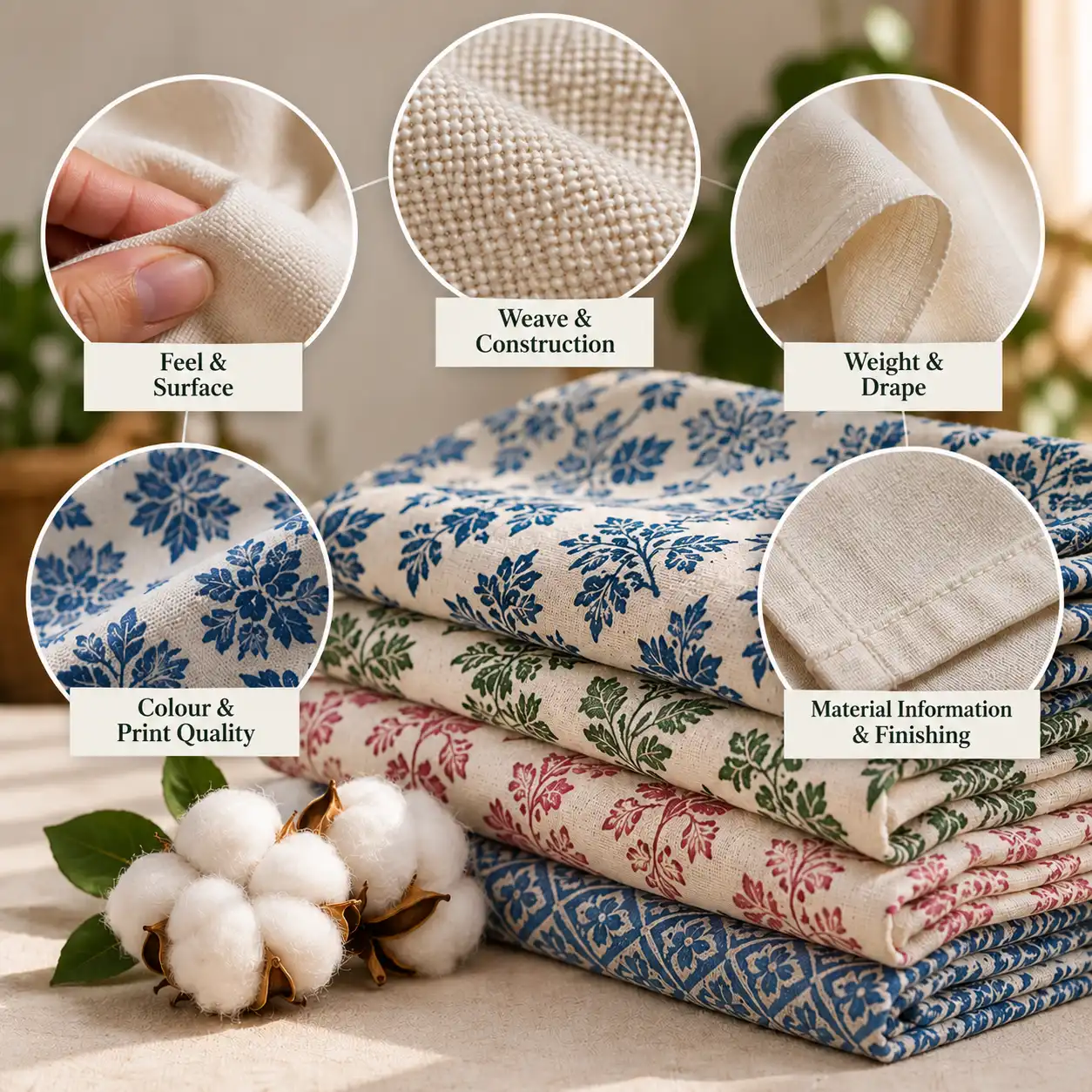
Buying cotton home furnishings can feel simple until you start comparing different fabrics, finishes, and price points. Two products may both be called “cotton,” yet their feel, appearance, construction, and overall quality can be quite different.
So, how to identify quality cotton before bringing it into your home?
Start by looking beyond the label. The fabric feel, weave, surface, colour, stitching, and product information can tell you much more about what you are buying.
In this guide, we’ll cover 5 practical signs of quality cotton and explain what to look for when choosing cotton cushion covers, bolster covers, sofa covers, diwan sets, and other home furnishings.
You can start identifying quality cotton by checking these five things:
However, no single test can prove fabric quality on its own. A good buying decision comes from looking at several characteristics together and checking the manufacturer’s product information.
Quick Tip: Don’t judge cotton only by softness. A very soft fabric isn’t automatically higher quality, and a slightly firmer fabric isn’t necessarily poor quality.
The first thing most people notice is how cotton feels.
Quality cotton can have a comfortable, well-finished surface with a consistent feel. However, softness alone shouldn’t decide your purchase.
Run your fingers gently across the fabric and notice whether the surface feels:
Different cotton fabrics naturally have different textures, so don’t expect every good-quality cotton fabric to feel identical.
For example, a textured cotton furnishing fabric may feel very different from a finely woven cotton fabric while still being suitable for its intended use.
Be cautious if the fabric has:
Remember: Feel is a useful first check, not a complete quality test.
The weave gives you valuable information about how the fabric has been constructed.
Look closely at the fabric in good lighting. The threads should appear reasonably consistent for the type of weave being used.
You can check for:
A fabric with a consistent construction generally looks more refined.
Home furnishings experience regular handling. Sofa covers are stretched and adjusted, cushions are moved, and bolsters are frequently touched.
That makes fabric construction an important consideration alongside fibre type.
A beautifully printed fabric can still disappoint if the overall construction doesn’t suit its intended use.
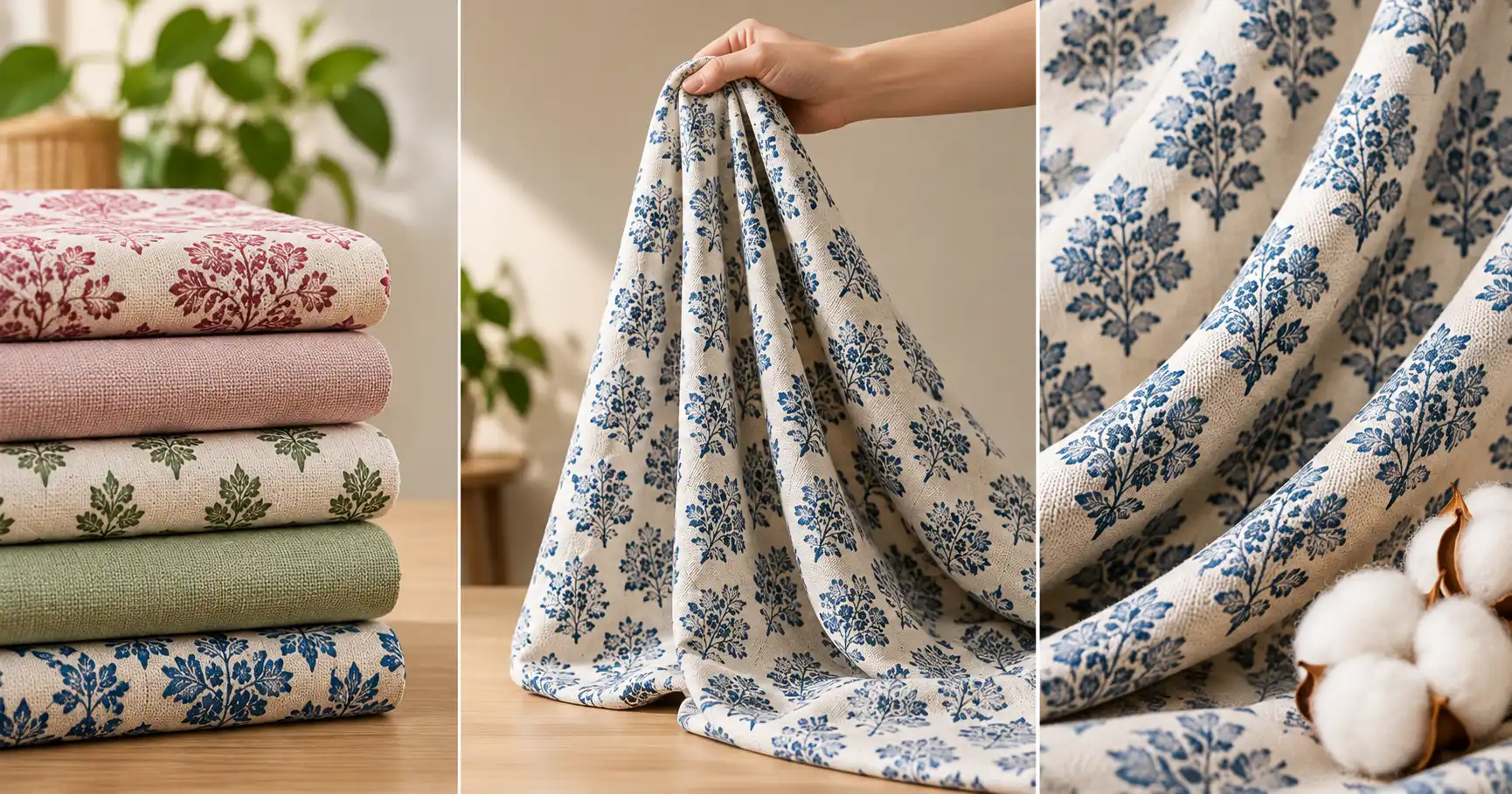
Another useful way to assess cotton is to observe how the fabric behaves when you hold it.
These observations can help you understand the fabric better.
However, heavier does not automatically mean better.
A lightweight cotton may be perfectly appropriate for one furnishing application, while a heavier construction may suit another.
The goal is not to find the heaviest cotton.
The goal is to find a fabric construction that suits the product and your intended use.
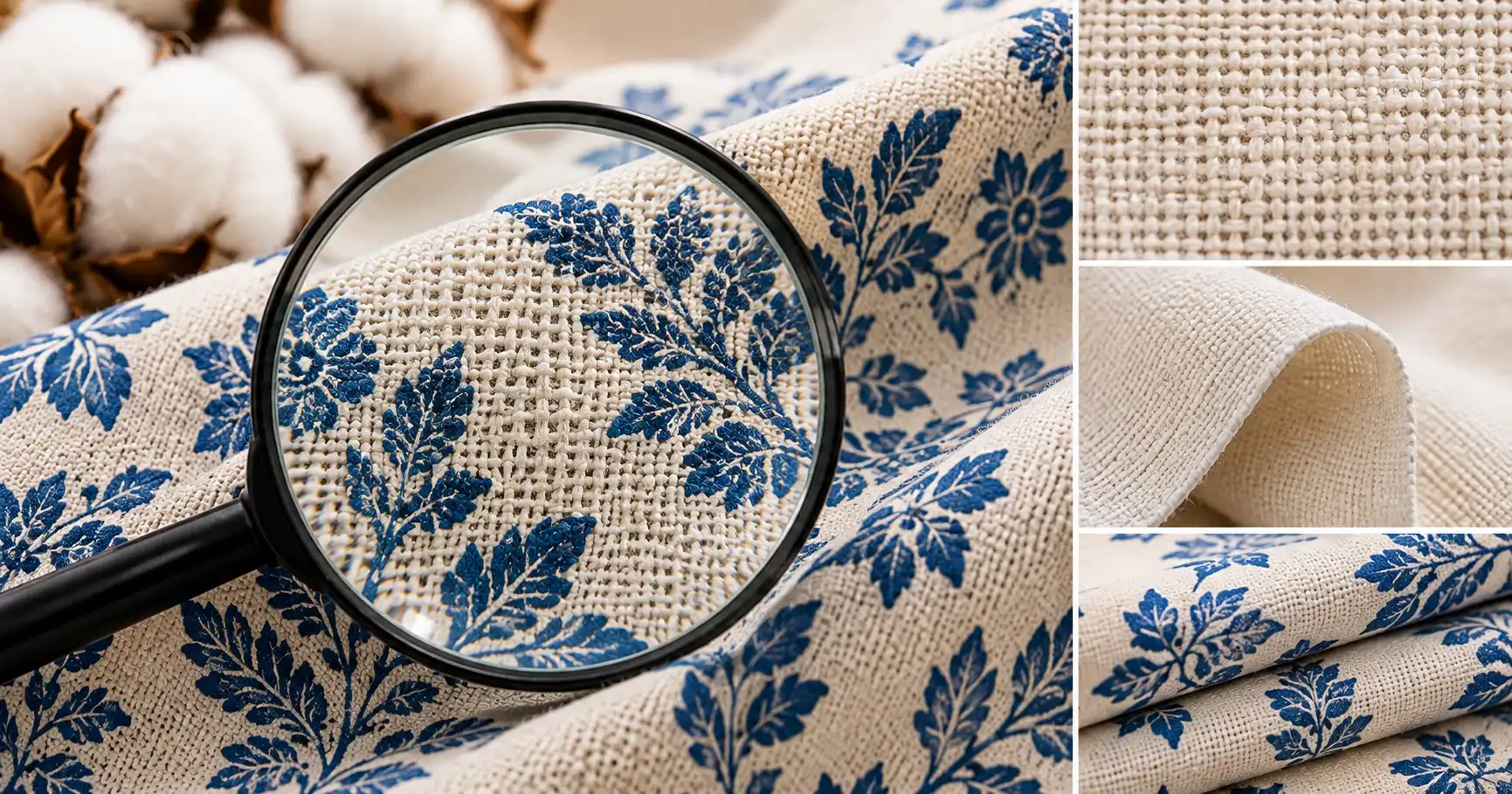
When buying patterned cotton furnishings, examine the print carefully.
A well-designed furnishing fabric should have a visually consistent print that suits the fabric and product.
Look for:
For patterned home furnishings, the design is more than decoration. It contributes significantly to how the finished product looks in your room.
Place the fabric or furnishing product in natural light.
Then look at the pattern from different angles.
Ask yourself:
These simple checks can help you make a more confident decision.
This is one of the most important steps when buying cotton online.
Don’t rely only on words such as:
“Cotton feel”
“Cotton-like”
“Cotton fabric”
Instead, check the stated material composition and product details.
If you specifically want pure cotton, look for clear information confirming the material composition.
You should also check the finished product for details such as:
A good fabric deserves good finishing.
After all, you’re not simply buying a piece of material. You’re buying a finished home-furnishing product that needs to work within your home.
Smart Buyer Tip: When shopping online, read the material composition, measurements, care instructions, and product description before making your decision.
There are several common misconceptions about cotton quality.
Understanding them can help you avoid making decisions based on a single feature.
Softness can be influenced by fibre characteristics, finishing, washing, and fabric construction.
Therefore, don’t assume that the softest fabric is automatically the highest quality.
Instead, consider the complete product.
Weight needs to match the intended application.
A heavier fabric isn’t automatically more durable or more suitable for every home furnishing.
Consider construction + intended use + comfort + care requirements together.
Thread count can be useful in certain textile comparisons, but it shouldn’t be treated as a universal quality score.
Different fabrics and furnishing applications require different constructions.
For home furnishings, look at the whole product, rather than choosing based on one number.
A visually attractive design can make you want to buy immediately.
But colour and pattern are only part of the decision.
Before buying, also check:
Material → Construction → Finishing → Size → Care → Intended use
That gives you a much more complete picture.
Buying fabric in person gives you the advantage of touching and examining it directly.
Online shopping is different.
You need to rely more heavily on the information provided with the product.
1. Material composition
Confirm what the product is made from.
2. Product dimensions
Make sure the size matches your furniture or insert.
3. Product photographs
Look closely at the fabric, pattern, stitching, and finishing.
4. Care instructions
Understand how the product should be washed and maintained.
5. Product description
Read the complete description instead of relying only on the product title.
6. Seller information
Choose a brand that provides clear product information.
Online buying rule: If an important product detail isn’t clearly stated, don’t assume it.
For shoppers specifically looking for pure cotton home furnishings, material composition is an important starting point.
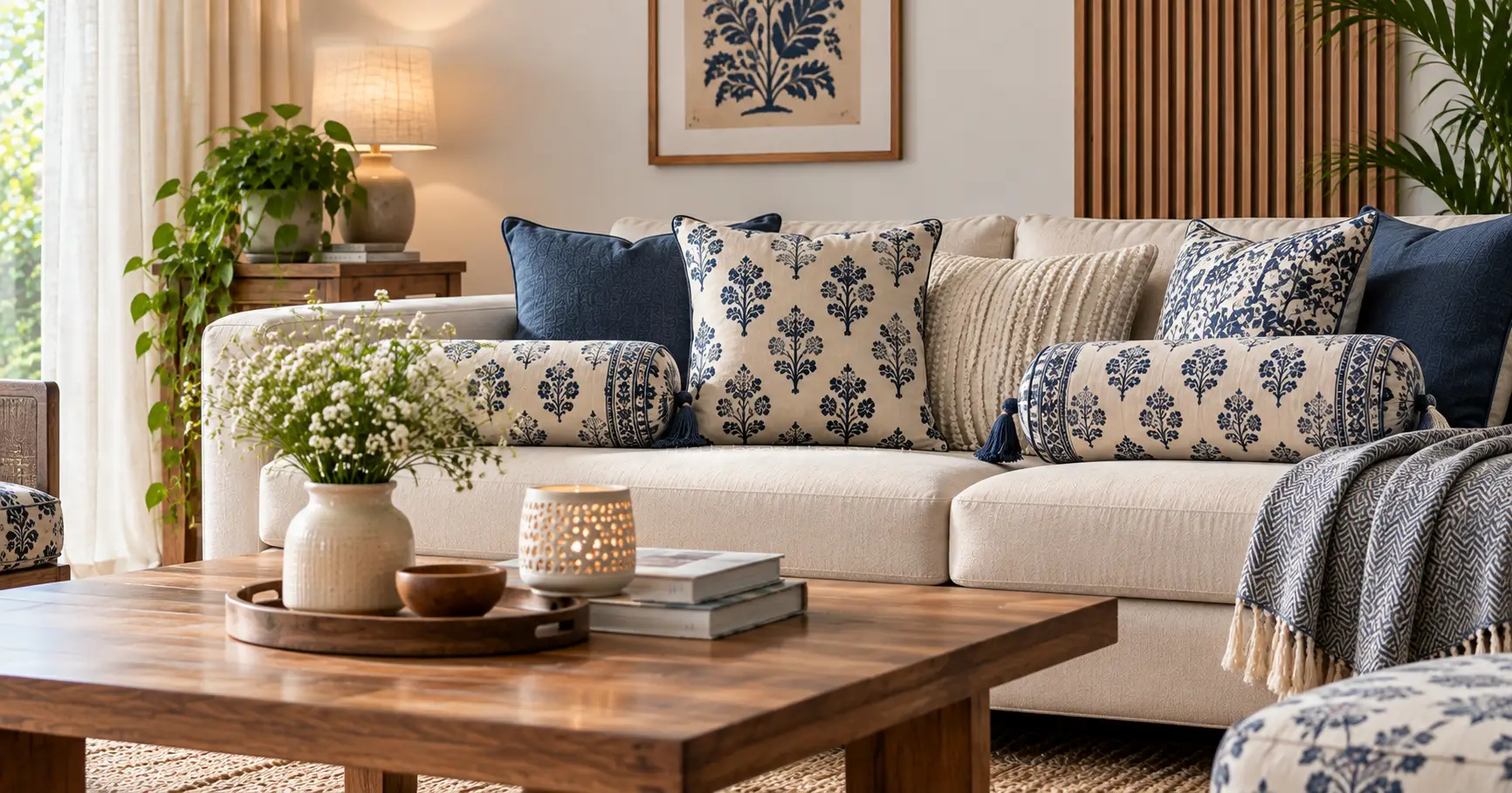
SkyKross offers pure cotton home furnishing products, including:
Instead of choosing a furnishing only because its pattern catches your eye, use the checks in this guide to evaluate the complete product.
Look at the material information. Consider the construction and finishing. Check the dimensions and care instructions. Then decide whether the product fits your home and lifestyle.
| Quality Check | What to Look For |
|---|---|
| Feel | Consistent and appropriate texture |
| Weave | Even construction without obvious defects |
| Weight & Drape | Suitable for the intended furnishing |
| Colour & Print | Consistent, clean and visually balanced |
| Composition & Finish | Clear material information and neat finishing |
The key takeaway: Quality isn’t determined by one characteristic. Evaluate the fabric, construction, finishing, and product information together.
Start by checking the fabric’s feel, surface, weave, weight, print, finishing, and stated material composition. No single visual or touch test can guarantee quality, so consider several factors together.
Check the product’s stated material composition. If you’re buying online, look for clear information about the fibre content rather than relying on appearance or softness alone.
Not necessarily. Softness can vary because of fibre characteristics, fabric construction, and finishing. Consider the entire fabric and its intended use instead of judging quality by softness alone.
Not automatically. Fabric weight should suit the intended application. A heavier fabric isn’t necessarily better for every furnishing product.
Thread count alone shouldn’t be used as a universal measure of cotton quality. Fibre, yarn, weave, construction, and finishing also influence how a fabric performs and feels.
Check the material composition, dimensions, photographs, product description, stitching, finishing, and care instructions. These details can help you make a more informed purchase.
