
📍Our Location
Shop No.100, Bapu Bazar, Jaipur (302003)

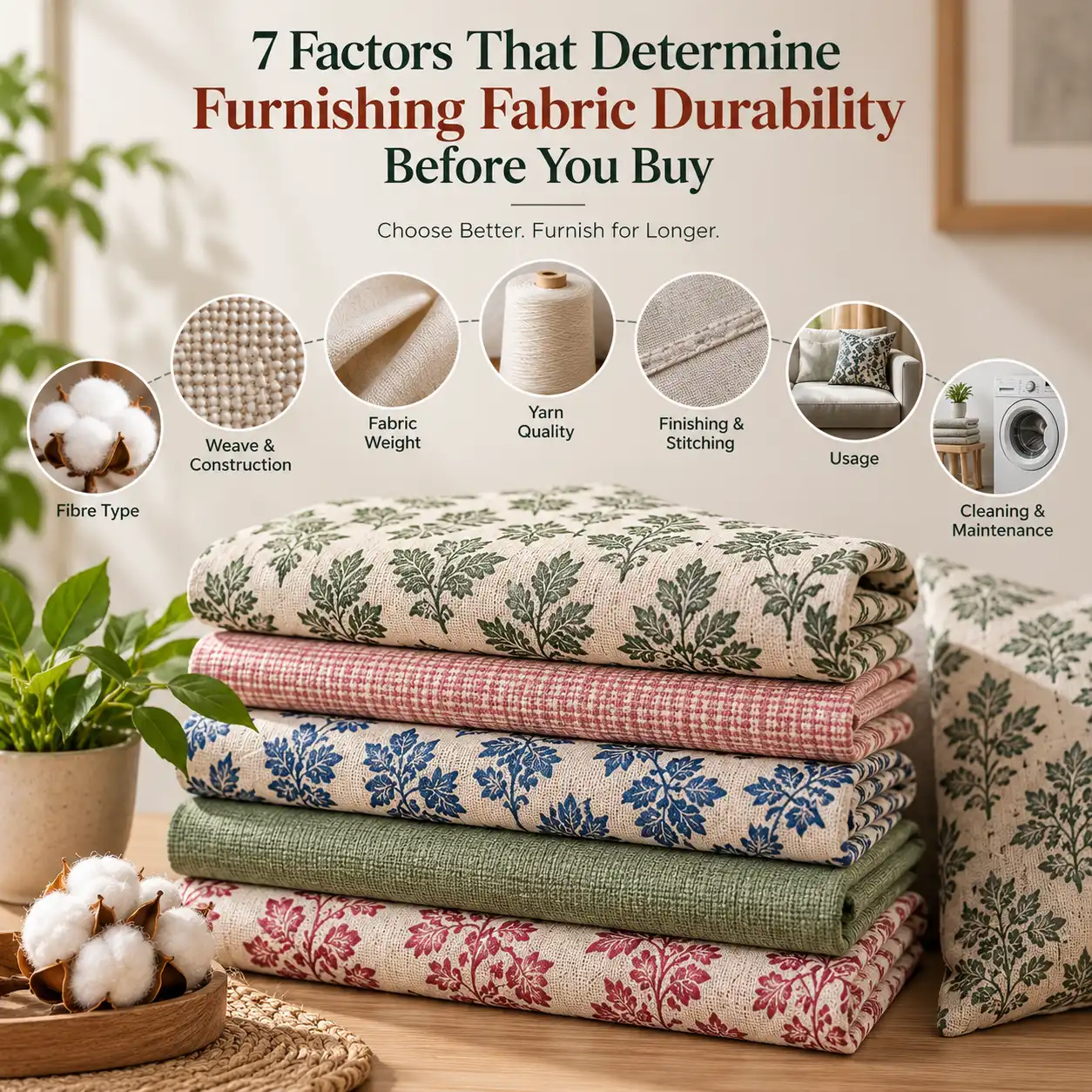
A beautiful furnishing can instantly refresh a room, but looks alone don’t tell you how well the fabric will hold up.
If you’re buying sofa covers, cushion covers, bolsters, or diwan furnishings, furnishing fabric durability should be part of your decision. The right fabric needs to suit not only your décor but also your daily routine.
So, what actually makes one furnishing fabric more durable than another?
It isn’t simply thickness or price. Fibre type, weave, construction, fabric weight, finishing, usage, and maintenance all influence how a furnishing performs over time.
In this guide, we’ll explain the seven factors that matter most and show you what to check before buying home furnishing fabrics.
The durability of a furnishing fabric depends mainly on:
A durable furnishing fabric is not necessarily the thickest or most expensive option. Instead, it should have a construction that matches its intended use and receives appropriate care.
Quick tip: Before buying, think about where the furnishing will be used, how often it will be handled, and how it will be cleaned.
When people talk about durable fabric, they usually mean its ability to maintain its appearance and function with regular use.
For home furnishings, durability can involve several things:
However, durability is always relative to use.
A decorative cushion may experience very different levels of wear compared with a sofa cover used every day by a family.
That’s why the best furnishing fabric for one application may not be the best for another.
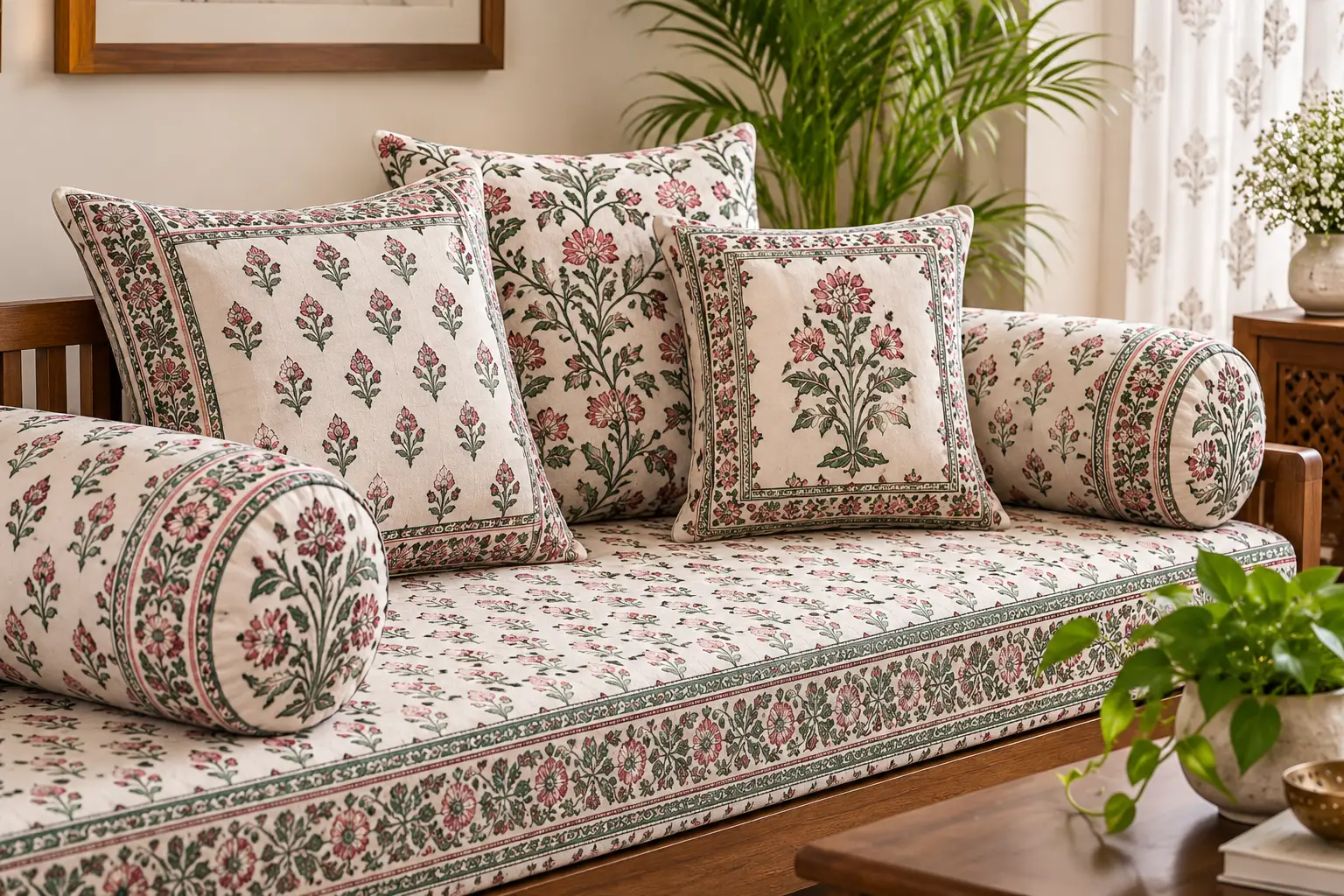
The first factor to consider is the fibre used to make the fabric.
Common fibres found in home furnishing fabrics include:
Each fibre has different characteristics.
Cotton is a natural fibre that is widely used in home textiles. It offers a familiar, comfortable feel and works across many furnishing applications.
Polyester is a synthetic fibre commonly used in furnishing products. It can be suitable for applications where particular synthetic-fibre characteristics are preferred.
Linen is another natural fibre known for its distinctive texture and relaxed appearance.
The important point is that fibre type alone does not determine durability.
A fabric’s weave, yarn, construction, finishing, and intended use also matter.
Don’t choose a furnishing based only on whether the label says cotton, polyester, or linen. Look at the complete product.
Two fabrics can use similar fibres while having very different constructions.
The weave describes how threads are arranged to create the fabric. Different weaving methods can produce different textures, structures, and appearances.
When examining a fabric, look for:
A well-constructed fabric should be appropriate for the job it is designed to perform.
For example, a sofa cover needs to handle regular movement and adjustment. A decorative cushion cover may have different requirements.
Imagine buying two cotton fabrics.
One has a suitable construction for regular furnishing use. The other is designed for a completely different application.
Both are cotton, but their performance can be different.
Fibre + weave + construction = a better indication of suitability than fibre name alone.
A common assumption is:
“The thicker the fabric, the more durable it must be.”
That’s not necessarily true.
Fabric weight can provide useful information, but it should always be considered alongside construction and intended use.
A very heavy furnishing may feel substantial but still be unsuitable for a particular application. Likewise, a lighter fabric can be appropriate when its construction matches the intended use.
Ask:
Is the fabric appropriate for the product?
For example:
| Furnishing | Important Considerations |
|---|---|
| Sofa cover | Construction, comfort, usage and maintenance |
| Cushion cover | Fabric feel, construction and appearance |
| Bolster cover | Comfort, stitching and regular handling |
| Diwan set | Construction, comfort and overall use |
| Curtains | Drape, appearance and intended function |
This approach gives you a more realistic understanding of fabric durability.
Fabric is made from yarns or threads, and their characteristics influence the final textile.
Factors such as yarn structure, consistency, and how the yarn is incorporated into the fabric can affect its appearance and performance.
You don’t need specialist textile knowledge to make a basic assessment.
When shopping, look closely at the fabric.
If you’re shopping in person, examine the fabric under good lighting.
If you’re shopping online, look for clear close-up photographs and detailed product information.
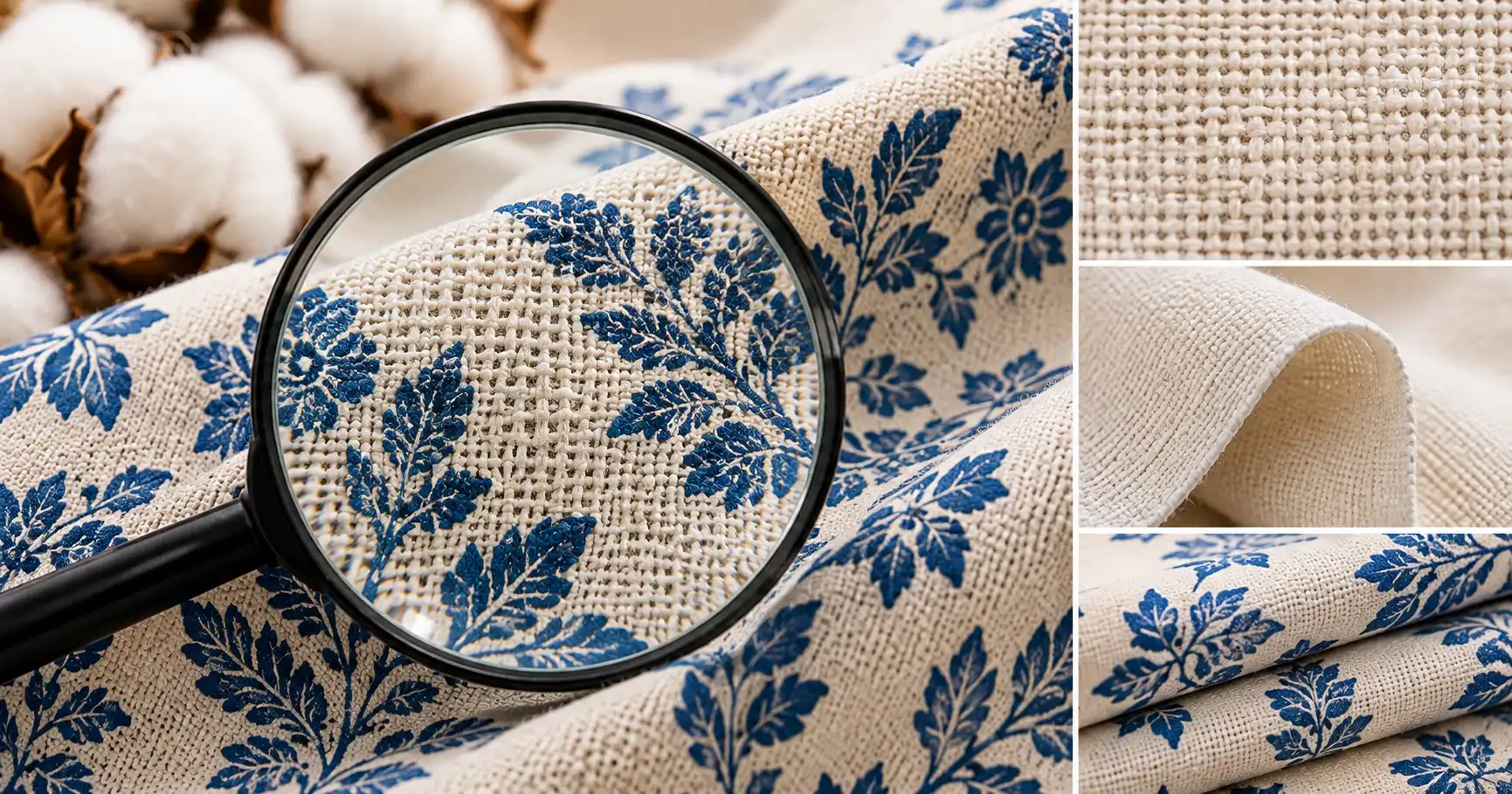
A furnishing product isn’t just fabric.
It is a finished product made from fabric, stitching, seams, closures, borders, and other components.
Even a good fabric can look poorly made if the finishing is careless.
Before buying, examine:
For a cushion cover, for example, the fabric may be excellent. But if the seams are poorly finished, the overall product may not meet your expectations.
That’s why product construction should be evaluated alongside fabric quality.
This factor is often overlooked.
The same fabric can experience completely different levels of wear depending on where you use it.
Consider these examples.
A sofa may be used several times a day.
The cover may experience:
Here, choosing a furnishing suitable for regular use becomes important.
A sofa used occasionally may experience considerably less everyday handling.
Decorative cushions may receive much less wear than cushions used continuously.
Therefore, don’t ask:
“What is the most durable fabric?”
Instead ask:
“What level of durability does this furnishing need?”
That’s a much more useful buying question.
Even a well-constructed furnishing needs appropriate care.
Frequent washing, unsuitable cleaning methods, excessive heat, or incorrect drying can affect some fabrics and finishes.
Before purchasing, always check the product’s care instructions.
Depending on the specific product, these may cover:
Follow the care instructions provided for the specific product.
Don’t assume that every cotton, linen, or synthetic furnishing should be cleaned in exactly the same way.
The fibre, construction, dye, print, and finishing can all influence care requirements.
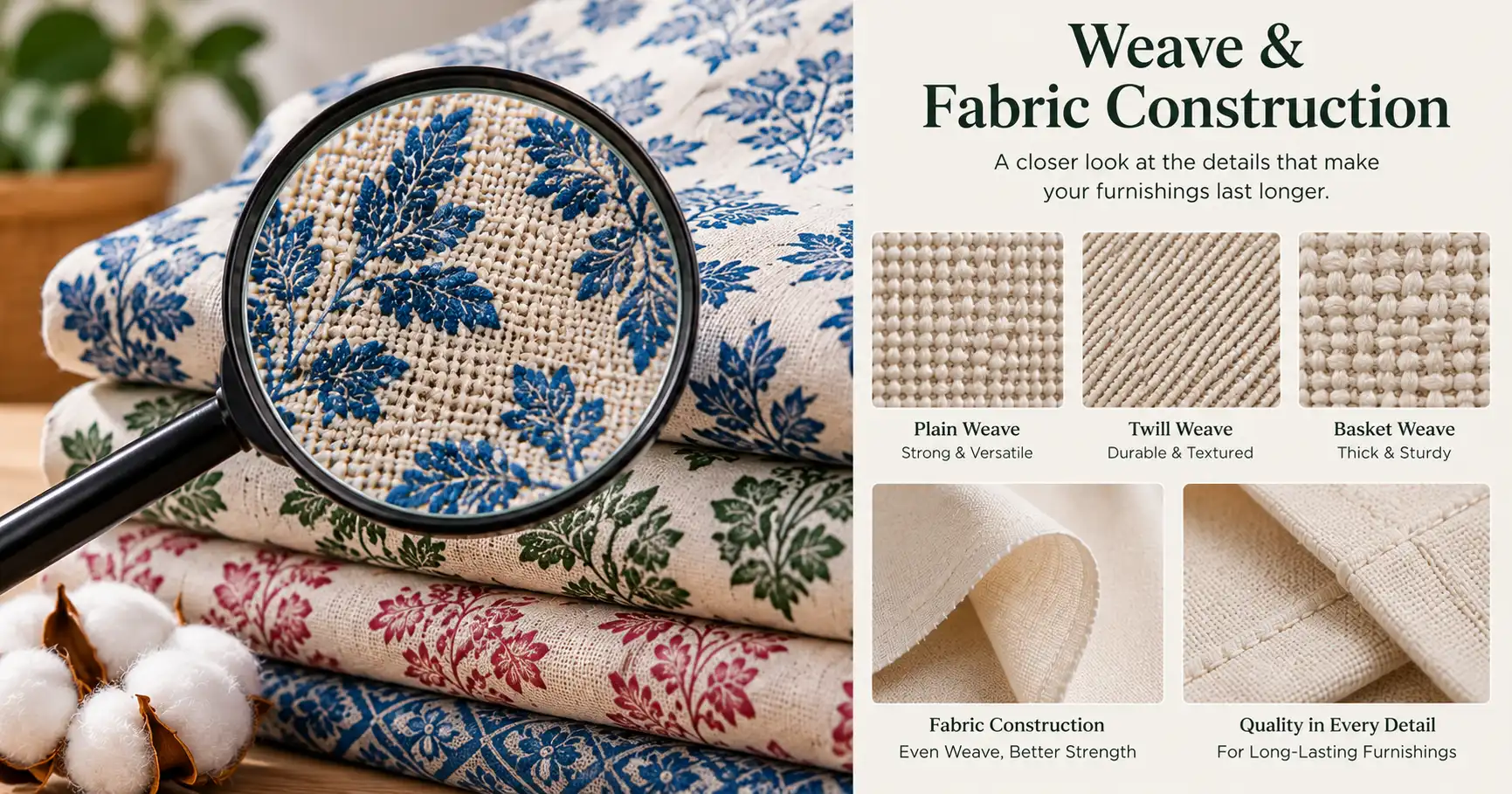
A durable furnishing fabric is not simply one that feels thick or heavy.
It should be appropriate for its intended application and able to withstand the level of use expected from that application when properly maintained.
For everyday home furnishings, look at the complete picture:
Fibre
↓
Weave
↓
Construction
↓
Weight
↓
Finishing
↓
Usage
↓
Care
This gives you a much better framework for comparing fabrics.
Cotton deserves particular attention when discussing home furnishings because it is a natural fibre widely used in household textiles.
But it’s important to avoid a common misconception:
Pure cotton does not automatically mean that every cotton fabric will have identical durability.
Cotton fabrics can differ in weave, yarn, weight, construction, finishing, and intended application.
So, if you’re choosing cotton furnishings, don’t stop at the word “cotton.”
Look at the product as a whole.
For shoppers who prefer natural-fibre furnishings, a well-made cotton product can be an appealing choice for everyday home décor.
Cushion covers give you more freedom to experiment with colours and patterns.
For frequently used cushions, consider the fabric’s construction and care requirements. For decorative cushions, appearance may play a larger role.
Cotton can be an appealing option if you prefer a natural-fibre furnishing with a comfortable textile feel.
Bolsters are frequently moved and handled, particularly in everyday living spaces.
When choosing a bolster cover, consider:
Coordinating your bolster covers with cushions can also make the overall furnishing look more intentional.
A diwan combines seating, lounging, and decorative functions.
Therefore, its furnishing needs to balance comfort, appearance, and suitability for regular use.
When buying a diwan set, consider the complete combination of:
Fabric + stitching + dimensions + design + care requirements
A coordinated room set can help create a consistent furnishing style across a space.
When several pieces share complementary colours or patterns, the room can feel more cohesive.
For everyday use, however, don’t choose coordination at the expense of practicality.
Before purchasing, run through this simple checklist.
Sofa, cushion, bolster, diwan, curtain, or decorative furnishing?
Daily, weekly, occasionally, or mainly for decoration?
Check whether it is cotton, polyester, linen, or a blend.
Look at the weave, surface, edges, and overall construction.
Check the manufacturer’s care instructions.
Examine the stitching, seams, closures, and finishing.
Smart buying tip: A good-looking fabric is only one part of a good furnishing purchase. Evaluate the entire product.
A lower price doesn’t automatically mean poor quality. Likewise, a higher price doesn’t automatically guarantee better durability.
Compare the actual product specifications instead.
Thickness is only one characteristic.
Construction and intended use matter too.
A fabric can perform differently when it is cleaned incorrectly.
Always follow the care guidance provided for the product.
A beautiful fabric may not be appropriate for every furnishing.
Think about how the product will actually be used.
Don’t inspect only the centre of the fabric.
Look at the seams, edges, closures, and overall finishing of the finished product.
| Factor | What to Check |
|---|---|
| Fibre | Cotton, linen, polyester, blend or other |
| Weave | Consistency and construction |
| Weight | Appropriate for intended use |
| Yarn | Consistency and visible defects |
| Finishing | Seams, edges and stitching |
| Usage | Frequency and type of handling |
| Care | Washing and maintenance requirements |
Save this checklist before your next home furnishing purchase.
It can help you compare products more thoughtfully instead of choosing based only on colour or price.
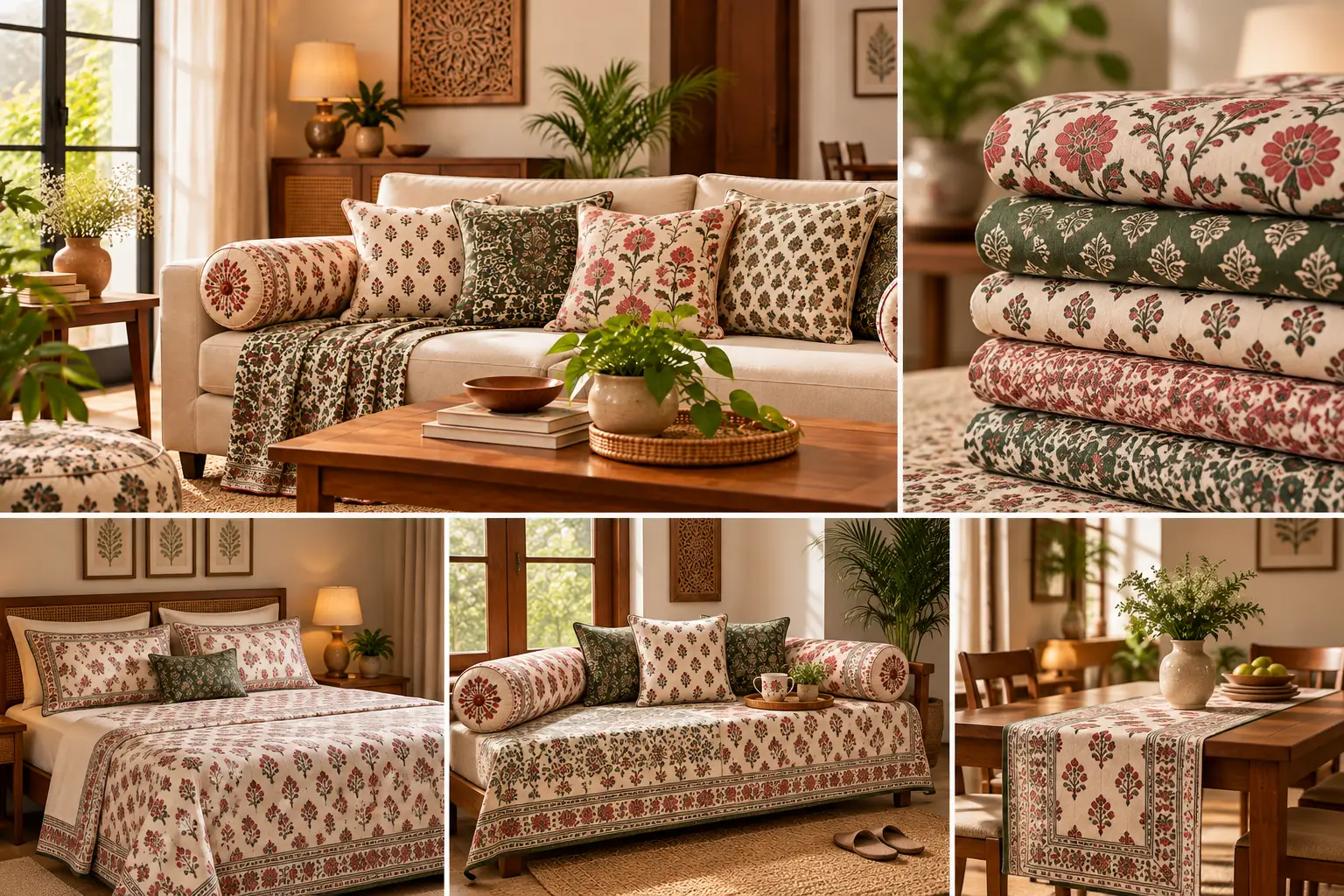
For homeowners who prefer cotton furnishings, SkyKross offers products across several home-furnishing categories.
These include:
If you’re considering cotton for your home, use the checklist above before making your choice.
Check the stated material. Look at the construction and finishing. Consider the intended use and care requirements.
Then choose the design that works naturally with your space.
Furnishing fabric durability depends on several factors, including fibre type, weave, yarn characteristics, construction, fabric weight, finishing, frequency of use, and maintenance.
No. Thickness alone does not determine durability. A fabric’s construction, fibre, finishing, and intended application also influence its suitability and performance.
Cotton can be suitable for many home-furnishing applications, but durability varies between cotton fabrics. Weave, yarn, construction, finishing, and intended use all matter.
There is no universal answer. Consider how frequently the sofa is used, the fabric’s construction, comfort, care requirements, and the overall design of the room.
