
📍Our Location
Shop No.100, Bapu Bazar, Jaipur (302003)

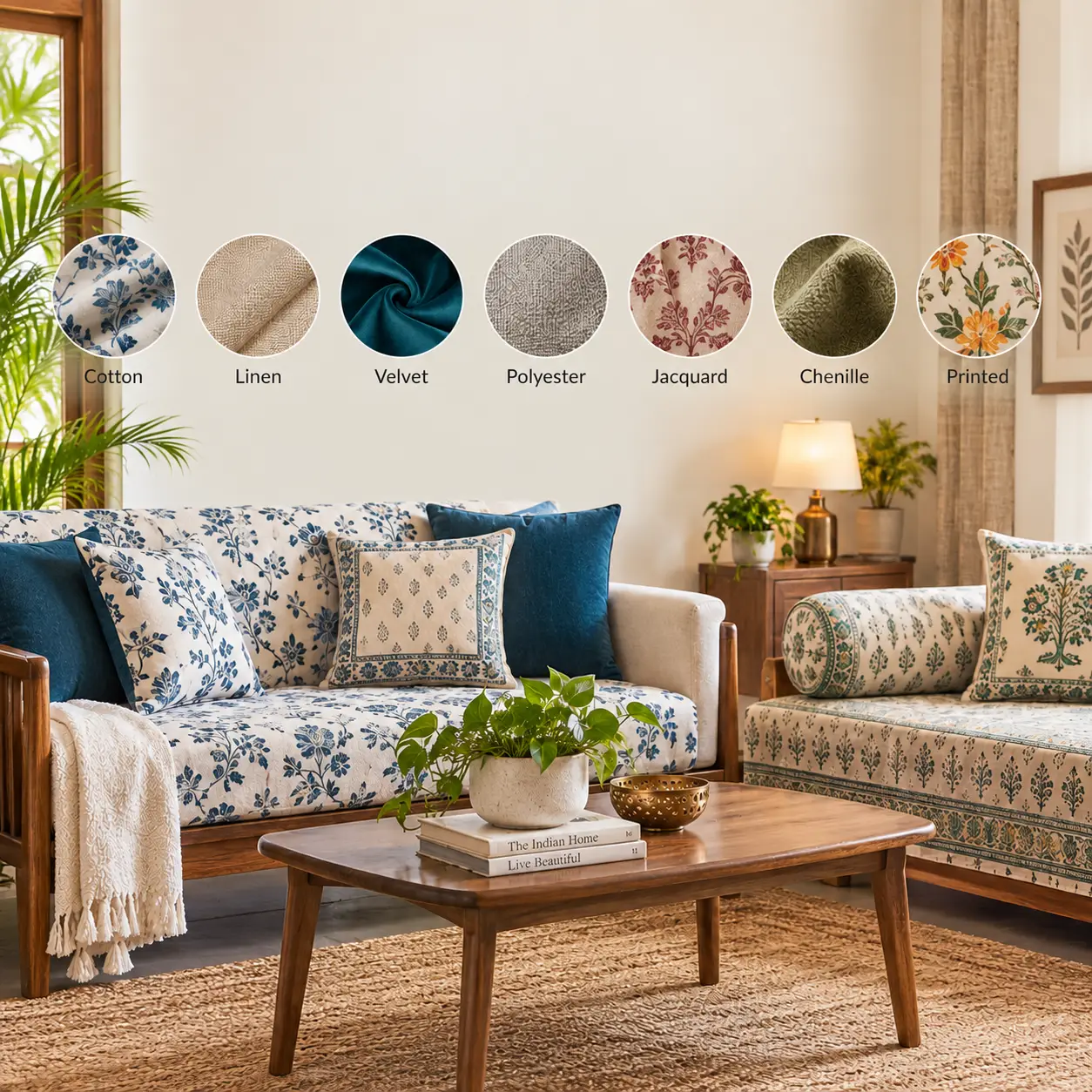
Choosing the right fabric can change how comfortable, practical, and inviting your home feels. But with so many furnishing fabric types available, it can be confusing to know which one suits your space.
Cotton, linen, velvet, polyester, jacquard, chenille, and printed fabrics each offer different textures, appearances, maintenance needs, and uses. The best choice depends on where you plan to use the fabric and how you use your home every day.
In this guide, we’ll explore the most popular home furnishing fabrics, compare their key characteristics, and help you choose furnishing fabric for sofas, cushions, curtains, diwan sets, and other spaces.
There is no single fabric that is best for every home.
For everyday furnishing, cotton is a practical choice when you value breathability, comfort, a natural feel, and versatile styling. Linen can work well when you want a relaxed, natural appearance, while velvet creates a richer decorative look. Polyester is often considered when easy maintenance and durability are priorities.
The right choice ultimately depends on usage, comfort, appearance, maintenance, and budget.
Quick Tip: Before choosing a fabric, decide where it will be used first. A fabric that works beautifully for decorative cushions may not be the best choice for frequently used sofa covers.
Furnishing fabrics are textiles used to decorate, cover, protect, or add comfort to different parts of a home.
They can be used for:
Unlike clothing fabrics, furnishing textiles are selected with the intended home application in mind. Factors such as texture, appearance, durability, cleaning requirements, and frequency of use can all influence the right choice.
Different types of furnishing fabric suit different purposes. Here are seven commonly encountered options and what makes each one useful.
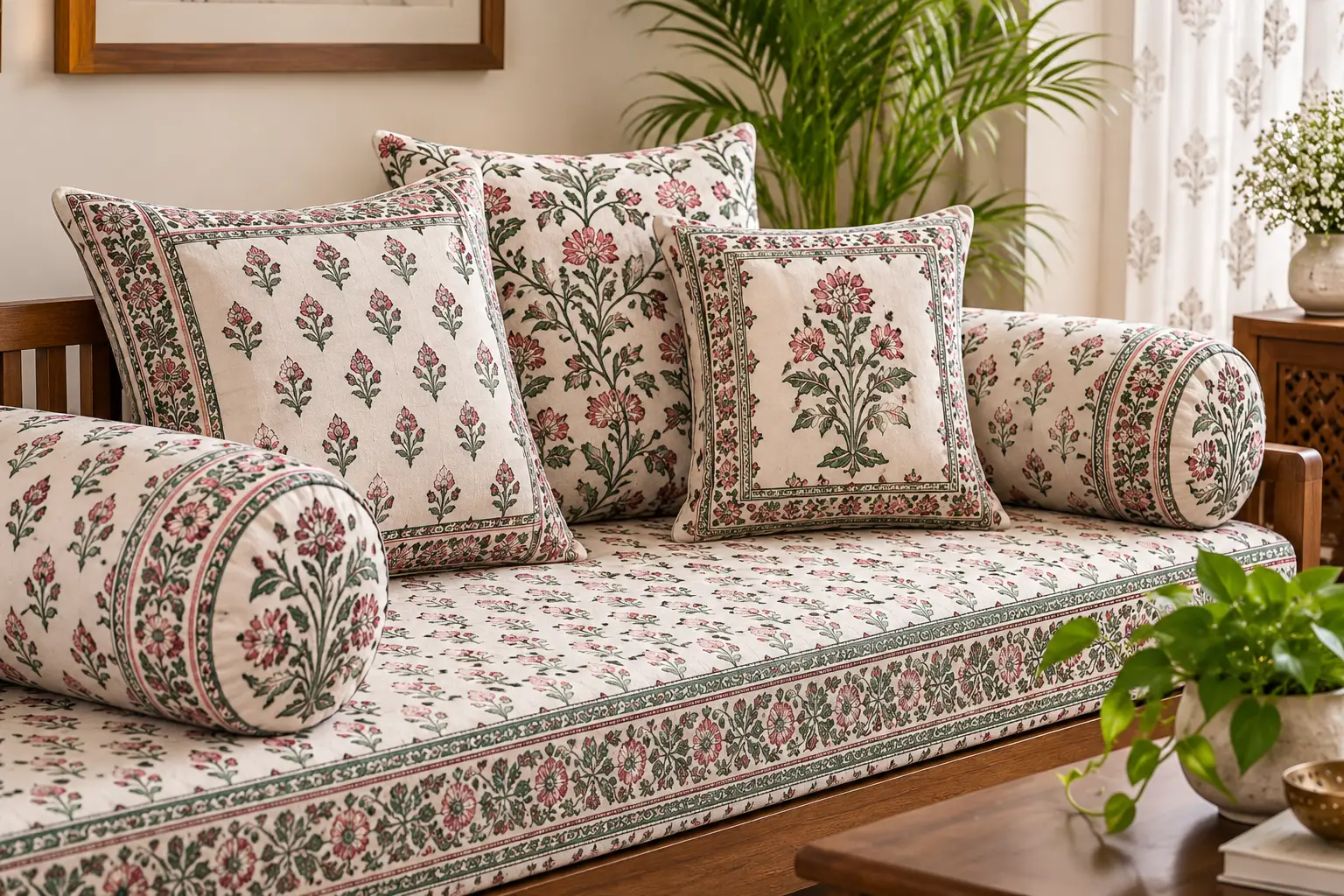
Cotton is a popular choice for home furnishing because it offers a comfortable, familiar, and versatile feel.
A cotton furnishing fabric can work particularly well for everyday home textiles such as cushion covers, bolsters, sofa covers, and coordinated furnishing pieces.
Why consider cotton?
Cotton can be especially appealing if you want your home to feel warm and relaxed rather than overly formal.
Best suited for: Cushion covers, bolster covers, sofa covers, diwan sets, and everyday decorative furnishing.
Linen is known for its natural appearance and relaxed texture. It can give interiors a simple, understated character.
It is often considered for spaces where you want a lighter, more natural visual aesthetic.
Why consider linen?
Linen can require more care depending on the product construction and care instructions, so always check the manufacturer’s recommendations.
Best suited for: Curtains, cushion covers, decorative furnishings, and relaxed interiors.
Velvet has a distinctive soft surface and rich visual appearance. It can make furniture and decorative pieces feel more luxurious.
Because of its appearance, velvet is often selected when the goal is to create a statement rather than a casual everyday look.
Why consider velvet?
However, velvet may need more careful maintenance than simpler everyday furnishing fabrics.
Best suited for: Accent furniture, decorative cushions, statement pieces, and formal interiors.
Polyester is a synthetic fibre commonly used in home textiles. Its practical characteristics can make it useful for furnishing products that need regular use.
One of its biggest advantages is that it can be relatively easy to maintain, depending on the specific fabric construction.
Why consider polyester?
Its feel and appearance can vary significantly between different fabric constructions.
Best suited for: Frequently used furnishing products, upholstery, covers, and practical home décor.
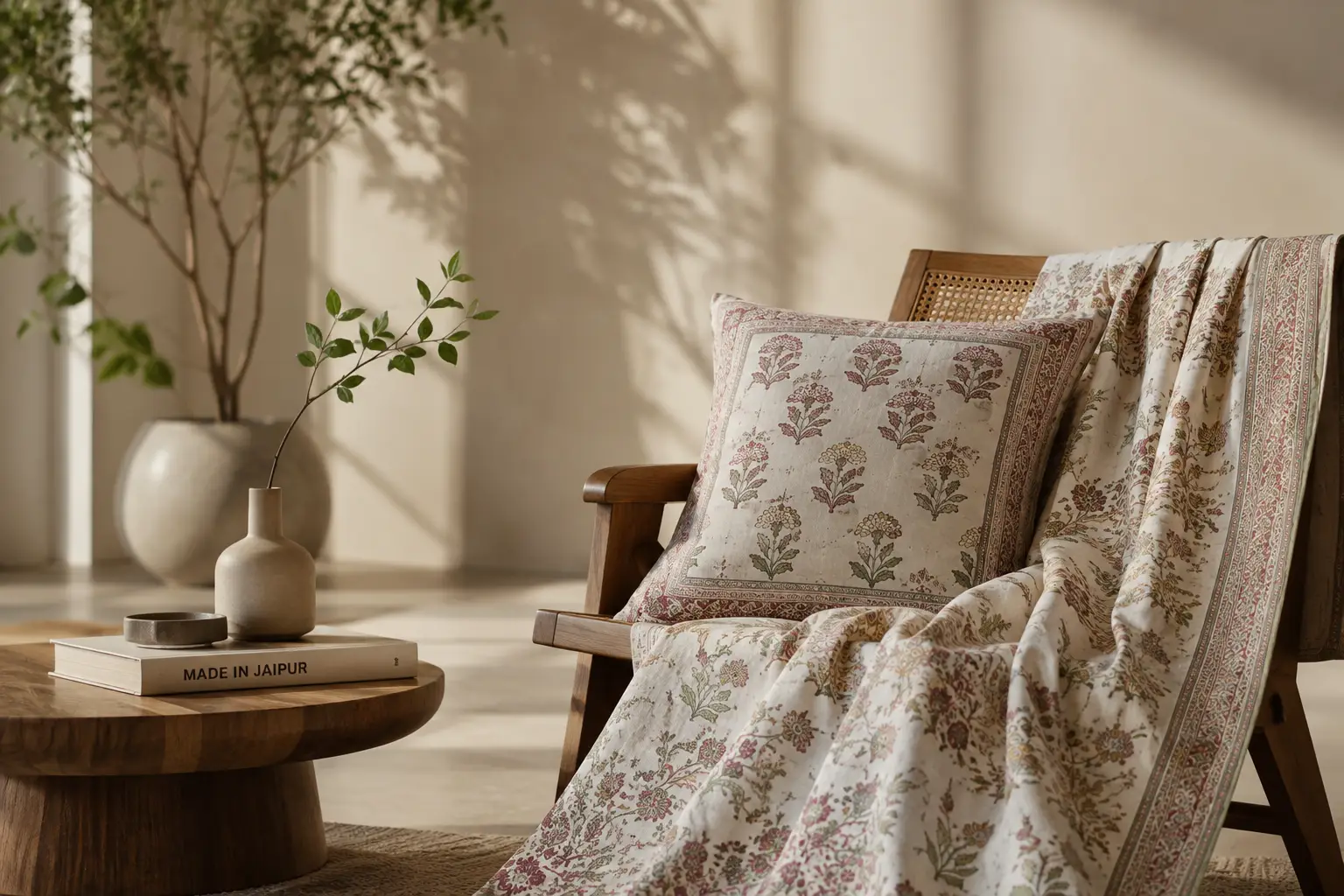
Jacquard refers to fabrics featuring woven patterns created through a specialised weaving process. The result can be detailed designs with a distinctive textured appearance.
This makes jacquard useful when the fabric itself is intended to contribute strongly to the décor.
Why consider jacquard?
Best suited for: Decorative upholstery, curtains, cushions, and statement furnishing pieces.
Chenille is recognised for its soft, textured surface. It can create a comfortable and inviting appearance, particularly on furniture and upholstery.
Its exact performance depends on the fibre composition and construction.
Why consider chenille?
Best suited for: Upholstery, sofas, chairs, cushions, and comfortable living spaces.
Printed fabrics add personality through colours, motifs, florals, geometric patterns, traditional designs, or contemporary prints.
Rather than relying on texture alone, printed furnishing fabric uses visual design to influence the overall look of a room.
Why consider printed fabrics?
Printed cotton can be particularly appealing when you want both the familiar feel of cotton and a decorative pattern.
Best suited for: Cushion covers, bolster covers, sofa covers, curtains, diwan sets, and decorative accents.
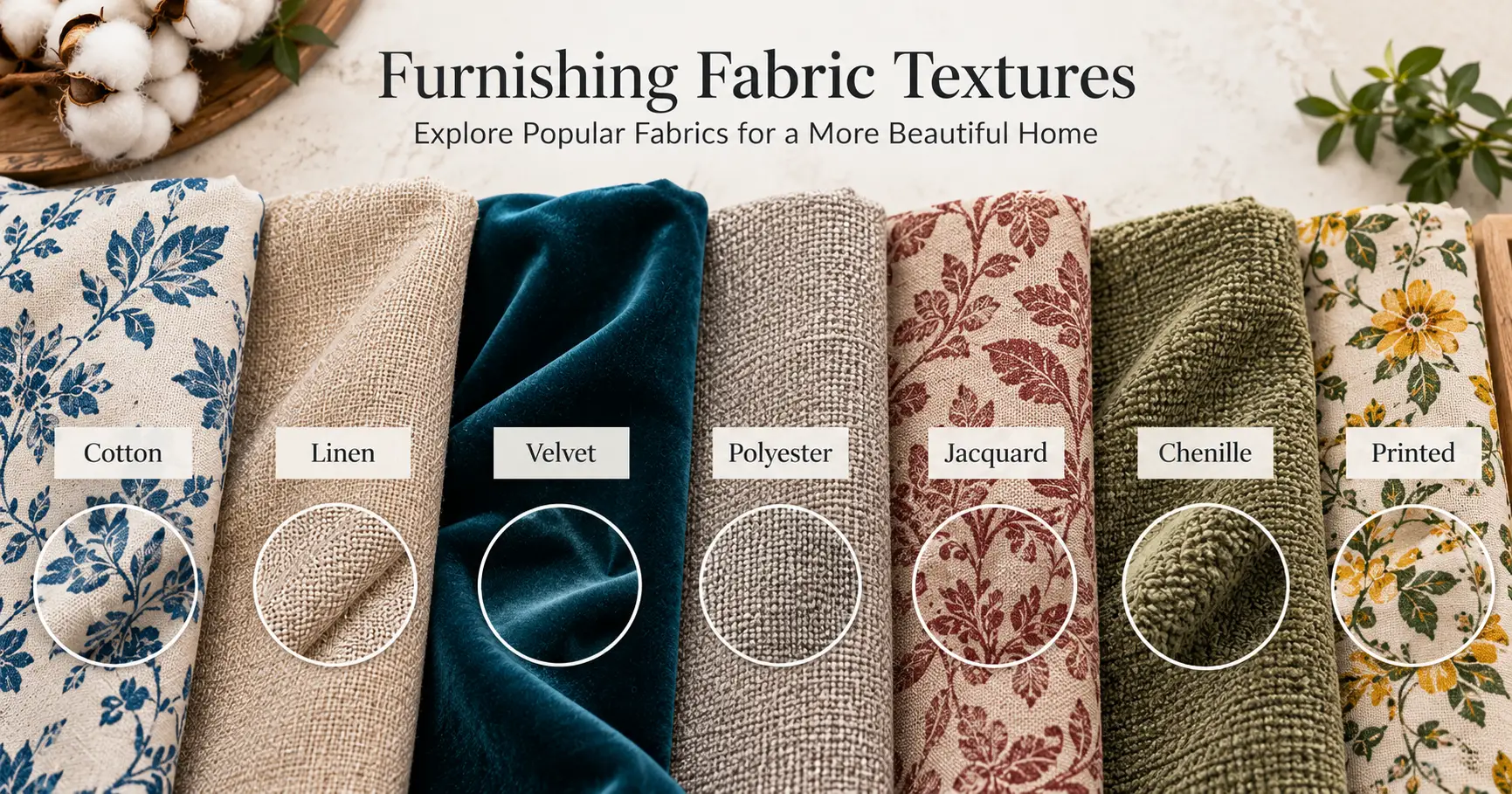
| Fabric Type | Main Characteristic | Suitable For | Maintenance |
|---|---|---|---|
| Cotton | Comfortable and versatile | Cushions, sofa covers, bolsters, diwan sets | Depends on construction and care instructions |
| Linen | Natural, relaxed appearance | Curtains, cushions, décor | Moderate |
| Velvet | Rich and luxurious texture | Accent pieces, cushions | Higher care may be needed |
| Polyester | Practical and versatile | Covers, upholstery, everyday use | Often easy to maintain |
| Jacquard | Detailed woven patterns | Curtains, cushions, décor | Depends on construction |
| Chenille | Soft textured surface | Sofas, chairs, upholstery | Depends on construction |
| Printed Fabric | Pattern and colour | Cushions, bolsters, covers, décor | Depends on fabric |
Important: Fabric performance varies by weave, fibre blend, construction, finishing, and care instructions. Always check the specific product details before buying.
Knowing the different fabric types is only the first step. The next question is how to choose furnishing fabric for your specific needs.
First, identify what you are buying the fabric or furnishing product for.
A sofa cover used every day has different requirements from a decorative cushion used occasionally.
Ask: Is it for everyday use, occasional use, or mainly decoration?
For products that you touch frequently, comfort matters.
Cushions, bolsters, sofa covers, and diwan furnishings can benefit from fabrics that feel pleasant in everyday use.
If comfort is a priority, consider how the fabric feels against the skin rather than judging it only by appearance.
Consider how frequently the furnishing will need cleaning.
If the product will be used every day, an easy-to-maintain furnishing fabric can make your routine simpler.
Always check:
Fabric isn’t only functional. It also influences the personality of a room.
For example:
Choose patterns and textures that complement your existing furniture instead of competing with it.
Indian homes experience different climates and living conditions across regions.
If your priority is a comfortable everyday furnishing experience, consider fabrics that suit your local climate and how frequently you use the space.
Your lifestyle matters too. A family living room may need different furnishing choices from a formal sitting area that is used occasionally.
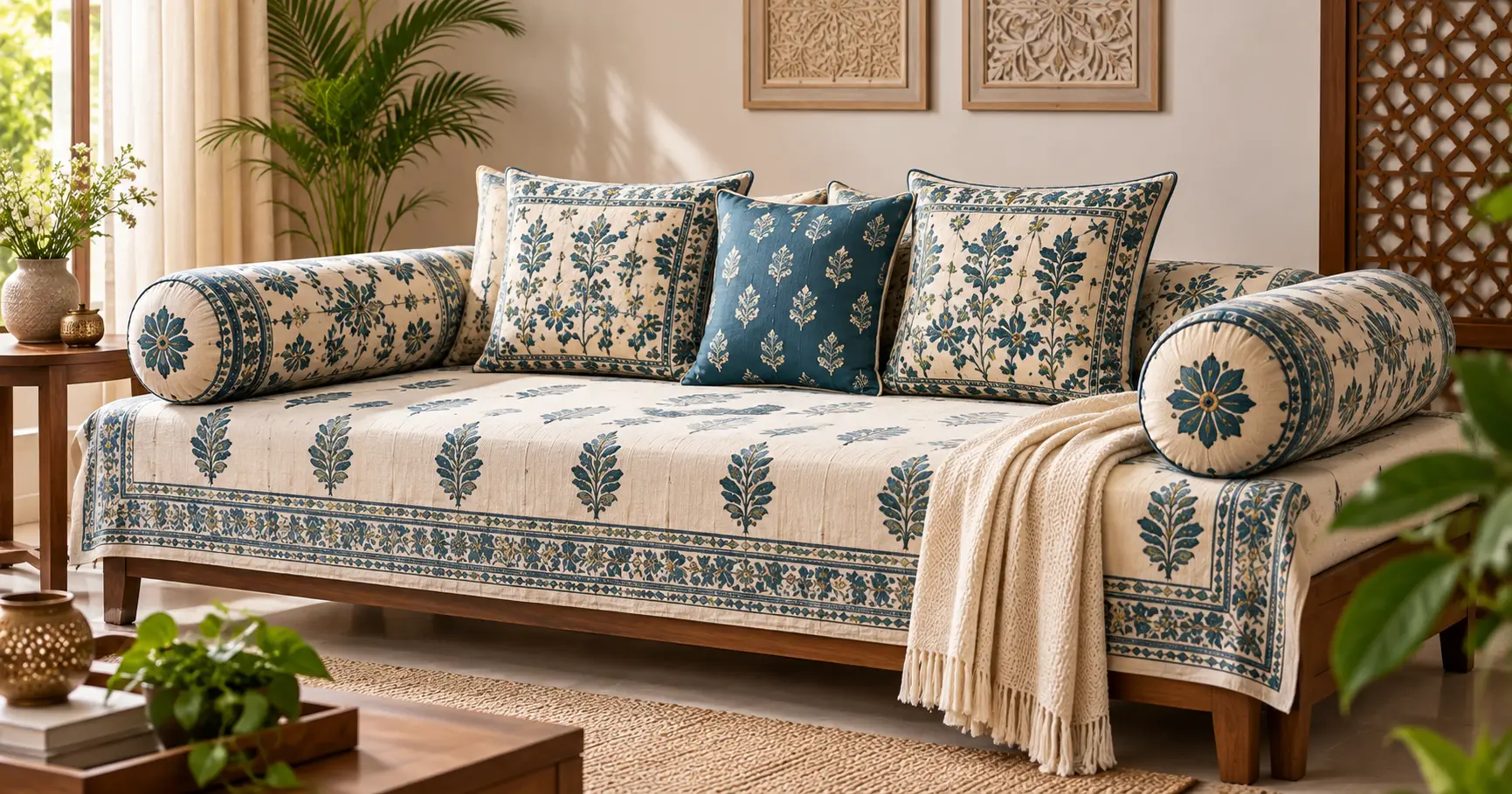
The best fabric for home furnishings depends largely on the application.
For sofa covers, consider the frequency of use, comfort, maintenance, and overall décor.
Cotton can be a good option when you want a comfortable and versatile furnishing material. Other fabrics may be preferable when specific performance or decorative characteristics are more important.
Tip: For an everyday sofa, prioritise practicality and maintenance rather than choosing purely based on appearance.
Cushion covers give you more freedom to experiment.
Cotton, linen, velvet, jacquard, and printed fabrics can all work depending on the look you want.
Because cushions are relatively easy to change, they are also a practical way to introduce new colours and patterns without changing your furniture.
Bolster covers are frequently touched, so texture and comfort matter.
Cotton can work well for everyday bolster covers, particularly when combined with colours or prints that coordinate with the rest of the room.
Curtains need to balance appearance with practical requirements such as light control, privacy, and maintenance.
Linen, cotton, polyester, and blended fabrics can all have different advantages depending on the curtain design and desired result.
Tip: Don’t choose curtain fabric based on colour alone. Consider the amount of light entering the room and how the curtains will be maintained.
A diwan is often both functional and decorative, making comfort and visual coordination important.
Cotton can be a practical choice for a relaxed, everyday setting, while printed designs can help create a more distinctive look.
If you want several furnishings to look connected, choosing coordinated colours, motifs, or fabric styles can create a more cohesive room.
A room set can help bring sofa, diwan, cushion, and other furnishing elements together visually.
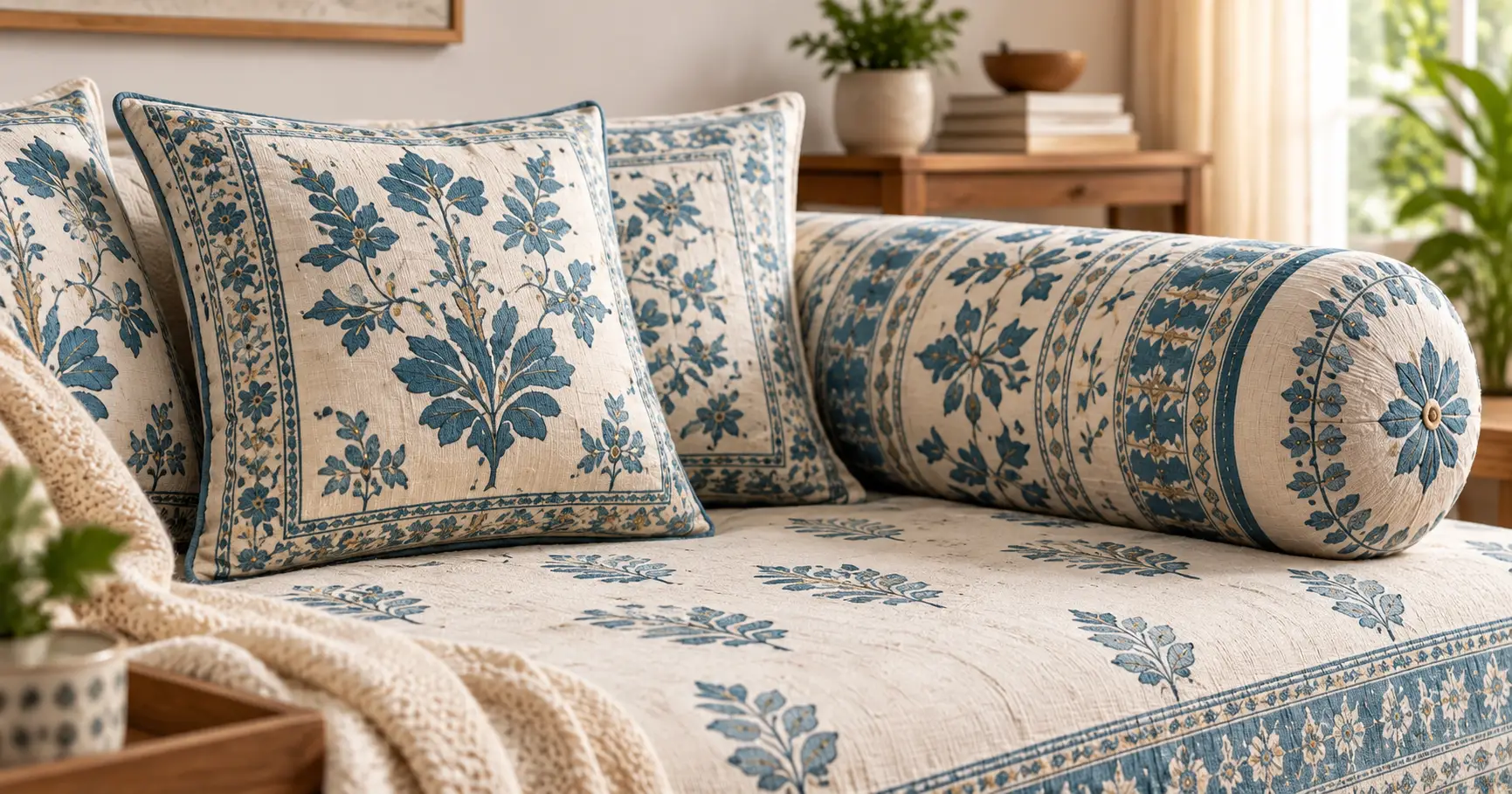
There is no universal winner. Each material has its own strengths.
| If you prioritise… | Consider… |
|---|---|
| Comfortable everyday furnishing | Cotton |
| Natural, relaxed appearance | Linen |
| Rich decorative appearance | Velvet |
| Practical everyday use | Polyester |
| Detailed woven designs | Jacquard |
| Soft textured feel | Chenille |
| Colourful patterns | Printed fabrics |
Cotton has a familiar place in Indian homes and can suit a wide variety of furnishing styles.
For homeowners who want comfortable, versatile textiles with plenty of design options, cotton can be an attractive starting point.
The important point is not to assume that one fabric is automatically best. Choose based on the room, application, lifestyle, and care requirements.
Once you understand the different furnishing fabric types, choosing home textiles becomes much easier.
SkyKross focuses on cotton home furnishing products designed to bring colour, pattern, and comfort into everyday spaces. Depending on your furnishing needs, you can explore options such as cushion covers, bolster covers, sofa covers, diwan sets, and room sets.
Whether you’re refreshing one corner of your living room or coordinating several furnishing pieces, start with the fabric, consider how you’ll use it, and then choose a design that complements your home.
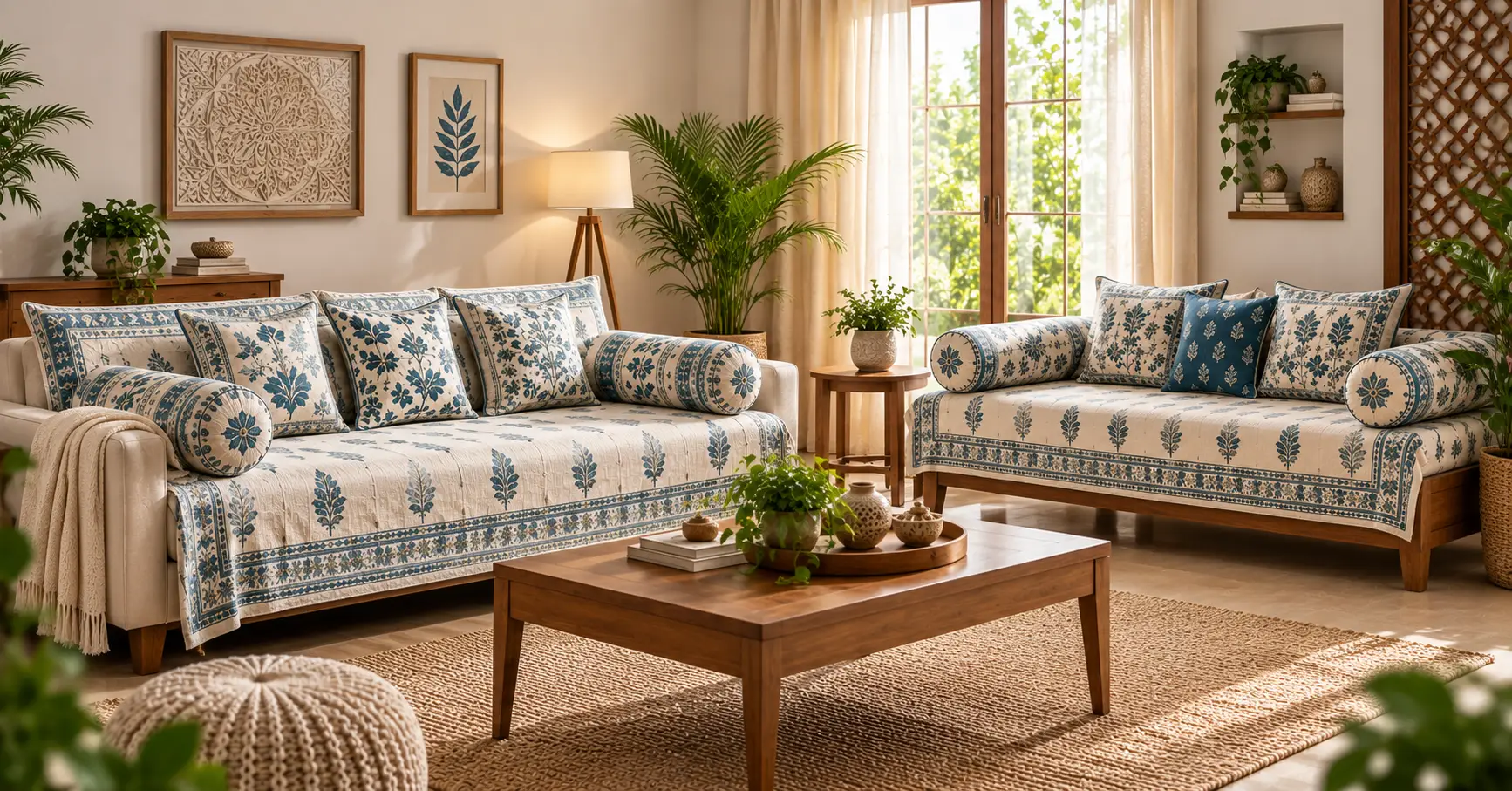
Common furnishing fabric types include cotton, linen, velvet, polyester, jacquard, chenille, and printed fabrics. Each has different characteristics and may suit different home applications.
The best fabric for sofa covers depends on usage, comfort, maintenance, and appearance. Cotton can be a practical choice for comfortable everyday furnishing, while other fabrics may suit specific decorative or performance requirements.
Yes, cotton can be a versatile option for home furnishing. It is commonly used for products such as cushion covers, bolster covers, sofa covers, and other decorative textiles.
Maintenance depends on the specific fabric construction and product. Polyester is often chosen for practical applications, while cotton and other natural fabrics can also be easy to care for when the product has suitable construction and clear care instructions.
The best fabric for cushion covers depends on your desired appearance, comfort, usage, and maintenance preferences. Cotton, linen, velvet, jacquard, and printed fabrics can all be suitable for different styles.
Start by considering where the fabric will be used, how frequently the furnishing will be used, the desired comfort level, maintenance requirements, décor style, and budget.
There isn’t one best furnishing fabric for every Indian home. Cotton can be a strong option for comfortable everyday furnishing, while linen, polyester, velvet, jacquard, and other fabrics may suit different rooms and requirements.
