
📍Our Location
Shop No.100, Bapu Bazar, Jaipur (302003)

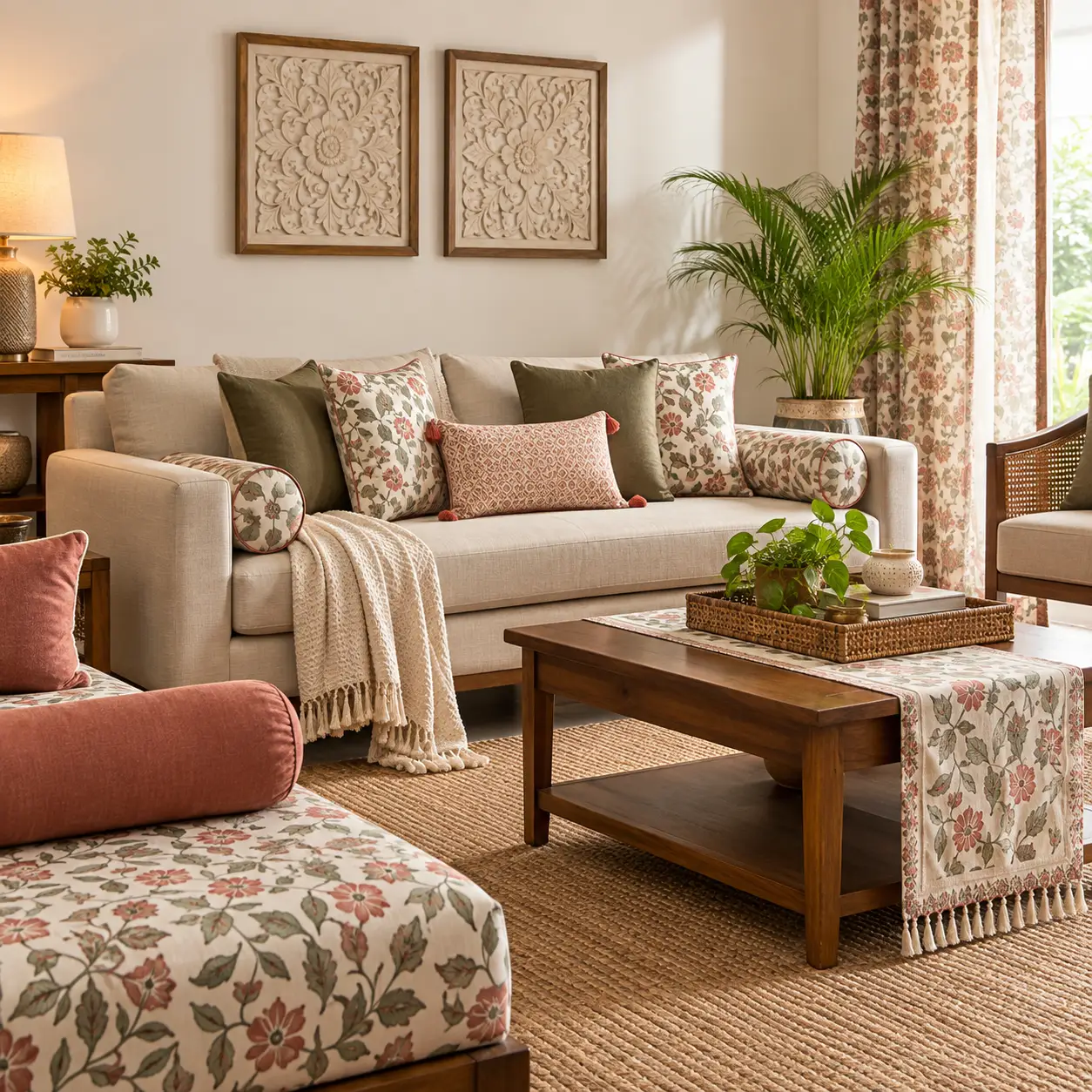
Your living room does not need expensive furniture or a complete makeover to look polished. The right living room furnishing choices can instantly make the space feel more comfortable, coordinated, and thoughtfully designed.
From layering cushions on your sofa to choosing the right fabrics, colours, patterns, and textures, small changes can create a noticeable difference. The key is to make every furnishing element work together, rather than adding too many decorative pieces.
If you are setting up a new home, refreshing your existing space, or simply wondering how to make your living room feel more inviting, these 10 practical ideas can help.
Quick Tip: Start with the largest furnishing element, such as your sofa, and build the rest of the room around its color, fabric, and style.
The easiest way to create a polished living room is to focus on coordination, layering, texture, and proportion.
You can make a noticeable difference by:
You do not need to use every idea at once. Choose two or three changes that suit your room and build from there.
One of the simplest living room furnishing ideas is also one of the most effective: use cushions to add layers of colour, pattern, and texture.
A sofa can look plain without decorative elements. Adding a thoughtful combination of cushion covers can make it feel more finished without changing the furniture itself.
Try combining:
Avoid choosing every cushion in a completely different style. Instead, select one common element, such as a colour, pattern, or fabric texture.
For example, if your sofa is neutral, you could combine earthy-toned cushions with a patterned accent. This creates visual interest while keeping the arrangement balanced.
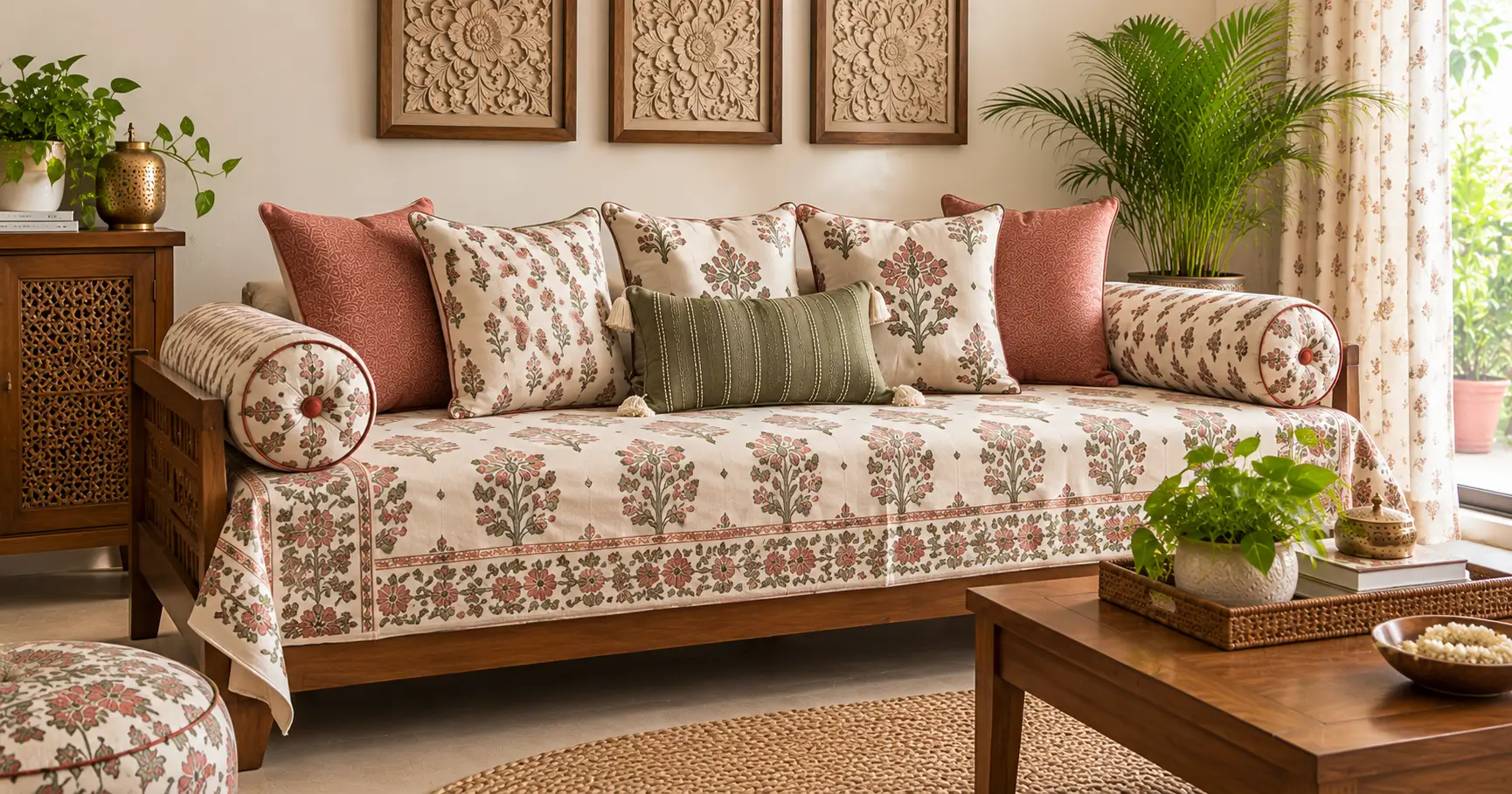
Bolsters are often overlooked when planning living room furnishings, but they can add both comfort and visual balance.
Their long shape naturally works well along the sides of sofas, diwans, and other seating arrangements. Pairing a bolster with square cushions creates different shapes within the same arrangement.
For a balanced sofa setup, try:
Square cushions + patterned cushion + bolster
This simple combination can make an ordinary sofa feel more styled.
Choose a bolster cover that shares at least one colour with your cushions. This small connection helps the different pieces feel like part of the same design.
A room can look expensive when its colours feel coordinated.
You do not need to restrict yourself to one colour. Instead, create a palette with a main colour, a supporting shade, and one accent.
For example:
| Main Color | Supporting Color | Accent |
|---|---|---|
| Beige | Cream | Terracotta |
| White | Sage Green | Mustard |
| Grey | Off-White | Rust |
| Brown | Sand | Olive |
| Blue | Ivory | Gold |
This approach works particularly well for living room furnishing ideas for Indian homes, where textiles and patterns can introduce plenty of colour.
If your sofa is already colourful, keep cushions and other furnishings relatively restrained. If your furniture is neutral, you have more freedom to introduce patterns and brighter accents.
Patterns can give a living room personality, but using too many unrelated designs can make the space feel chaotic.
The trick is to create a visual relationship between your patterns.
1. Solid:
Start with one or two plain cushions.
2. Small pattern:
Add a subtle print or geometric design.
3. Statement pattern:
Finish with one stronger pattern that attracts attention.
The patterns do not have to match exactly. They simply need to share a colour or visual characteristic.
This technique allows you to experiment with Indian-inspired textiles, geometric patterns, florals, stripes, or traditional motifs without making the room feel overcrowded.
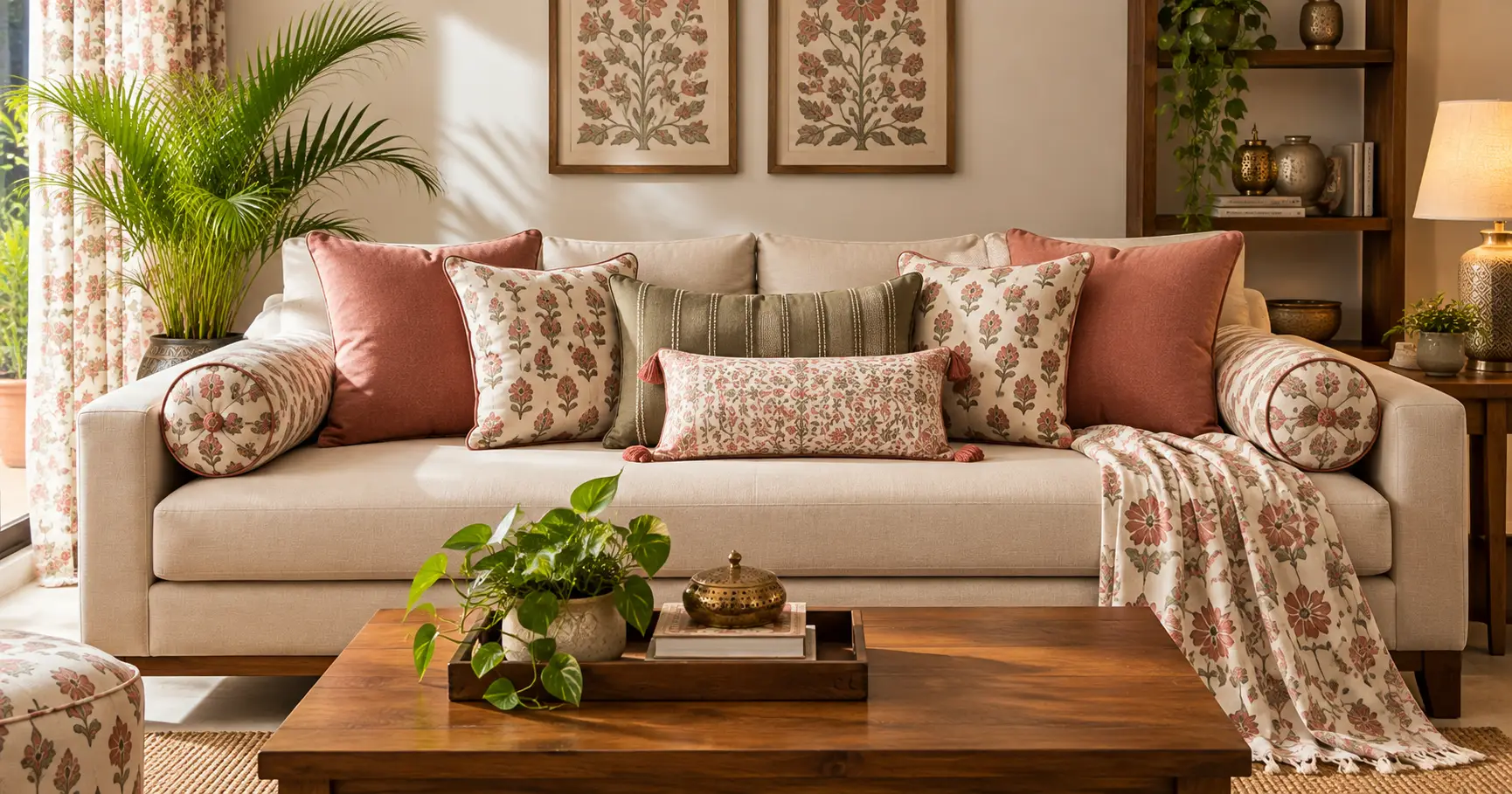
Replacing a sofa is a major decision. Sometimes, the sofa itself is perfectly functional, but the room simply needs a visual refresh.
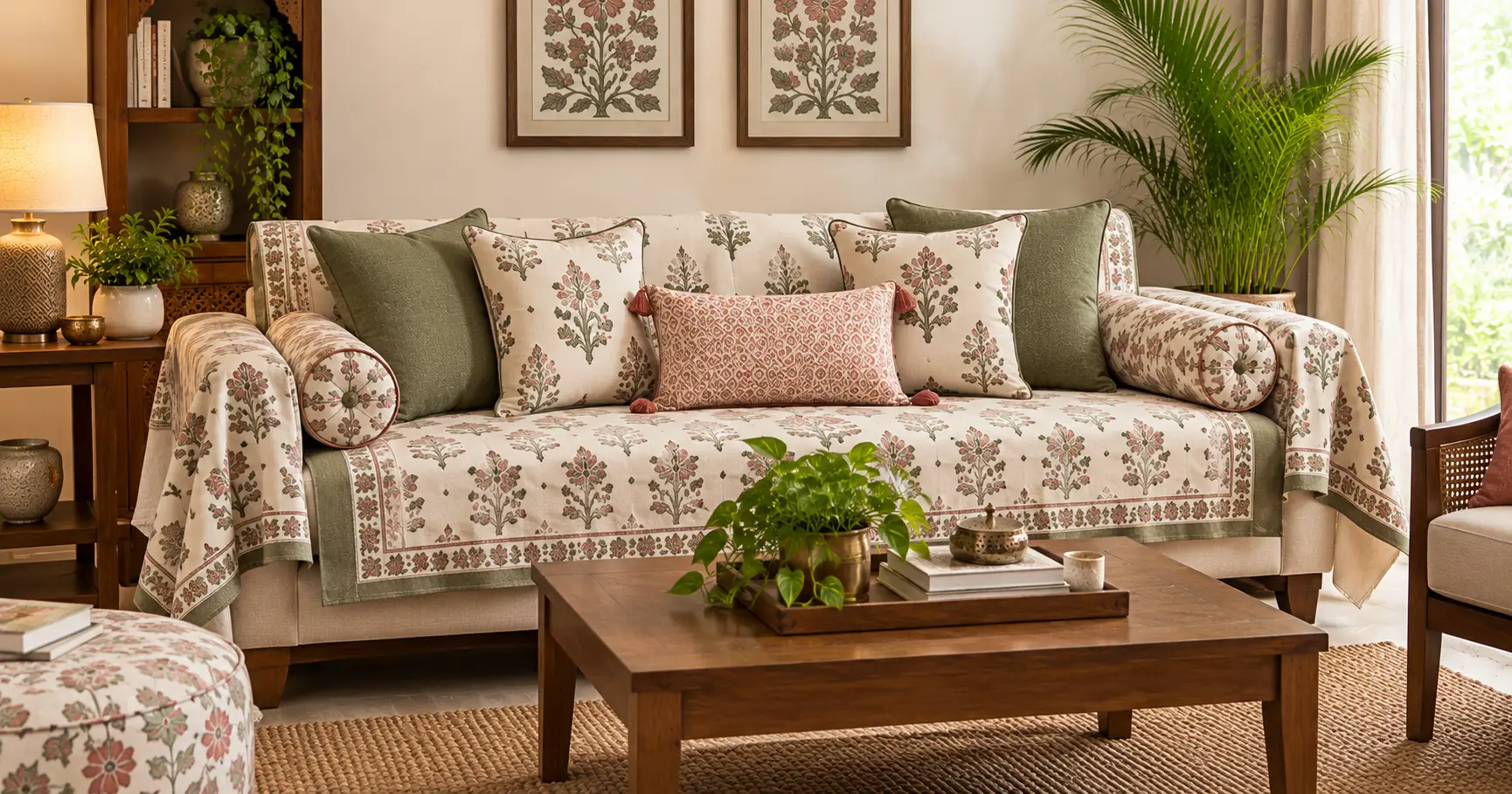
A well-chosen sofa cover can change the overall appearance of the seating area while helping protect the sofa from everyday use.
When choosing a sofa cover, consider:
For a neutral living room, a textured or subtly patterned sofa cover can add character. For a colourful room, a simpler cover can provide visual balance.
Curtains occupy a large visual area, so they can strongly influence how your living room feels.
However, your curtains do not need to match your sofa or cushions exactly.
Instead, look for complementary colours.
For example, if your sofa has neutral upholstery and your cushions feature earthy patterns, curtains in cream, beige, olive, or another related shade can bring the room together.
Match the mood, not necessarily the exact colour.
This gives you more flexibility while maintaining a coordinated appearance.
If you prefer a softer and more natural interior, cotton textiles can also help create a relaxed furnishing style.
Colour gets most of the attention in home décor, but texture can make an equally important difference.
Imagine a living room containing only smooth, identical-looking fabrics. Even with beautiful colours, the room may feel visually flat.
Instead, introduce subtle differences through:
The goal is not to make every surface different. A few carefully selected textures can add depth while keeping the room comfortable.
Design Tip: If your color palette is simple, use texture and pattern to create visual interest.
Many Indian homes have a diwan, additional seating area, or multifunctional corner in the living room.
Rather than leaving it as an unused space, treat it as another opportunity for furnishing and styling.
A coordinated diwan set can create a finished look while adding comfort to the seating area.
Consider combining:
The same colour palette used on your main sofa can be repeated here in smaller amounts.
This creates consistency throughout the room without requiring every piece to look identical.
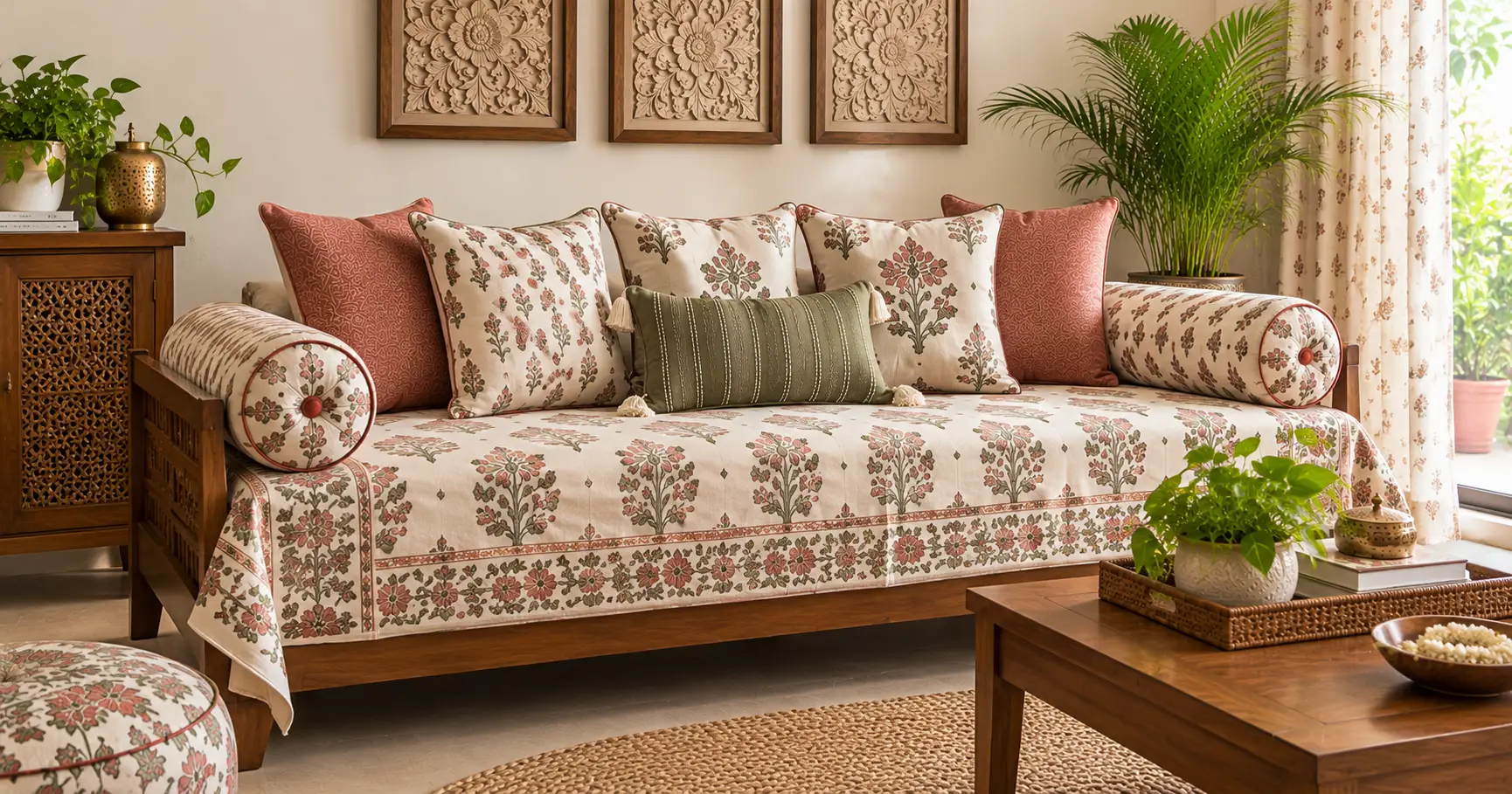
Open-plan living rooms can sometimes feel visually disconnected.
Furnishings can help define different areas without adding walls or large furniture.
For example:
Sofa Area
Use cushions and a throw to create a comfortable seating zone.
Reading Corner
Use a chair with a coordinating cushion and a small textile accent.
Diwan Area
Use a coordinated diwan set with bolsters.
Family Seating Area
Combine cushions and sofa furnishings around the main seating arrangement.
This approach makes the room feel organised while allowing different areas to have their own character.
Perhaps the most important living room styling idea is knowing when to stop.
Adding more furnishings does not necessarily make a room look better. In fact, too many cushions, patterns, colors, and decorative objects can make the space feel crowded.
After arranging your furnishings, step back and look at the entire room.
Ask yourself:
A premium-looking room usually has intentional choices rather than excessive decoration.
Not every home needs the same furnishing approach.
Your choices should reflect your room size, furniture, lifestyle, and personal taste.
Choose:
For modern living room furnishing, restraint often works better than excessive decoration.
Consider:
Traditional patterns can add warmth while still looking contemporary when balanced with simpler pieces.
Prioritize:
Avoid filling every available surface. Keeping some visual breathing room can make a smaller room feel more comfortable.
If you are unsure where to begin, use this simple approach:
Base:
Start with your sofa, chairs, or diwan.
Layer:
Add cushions, bolsters, and other comfortable textiles.
Accent:
Introduce one or two patterns, colours, or textures.
Balance:
Remove anything that feels unnecessary or visually distracting.
This formula works whether you are furnishing an entire room or simply updating your existing décor.
The right furnishing pieces can help you refresh your living room without replacing everything.
SkyKross offers home furnishing categories that can naturally fit into different living spaces, including cushion covers, bolster covers, sofa covers, diwan sets, and room sets.
Instead of completely redesigning your room, you can start with one area.
For example, refresh the sofa with new cushion covers and bolsters first. If the room still needs more coordination, consider introducing a complementary sofa cover or furnishing set.
Explore SkyKross:
The goal is simple: choose furnishings that complement your existing home rather than forcing the entire room into a completely new style.
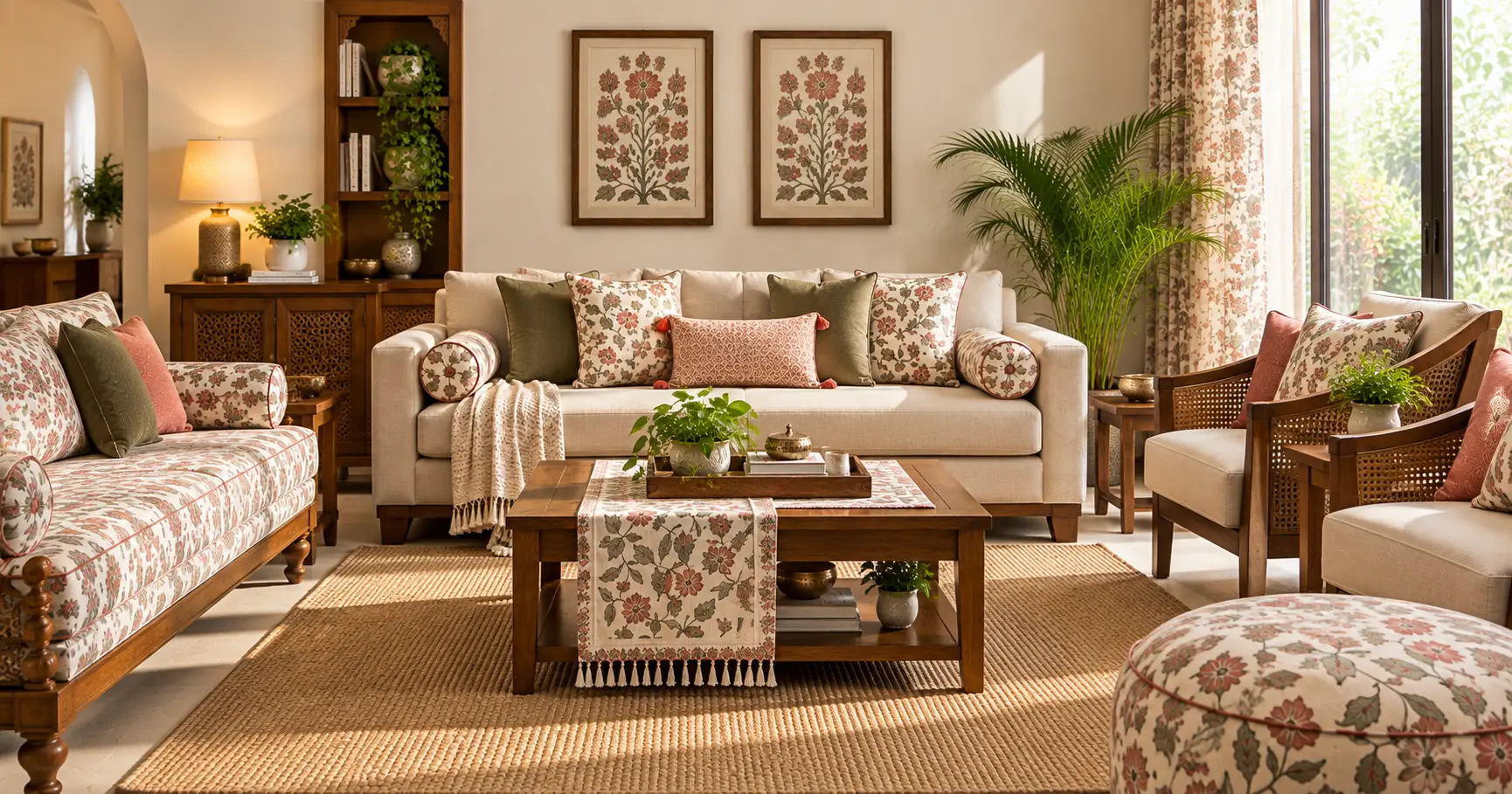
Before considering your living room finished, use this quick checklist:
☐ Choose a clear colour palette
☐ Refresh the sofa with coordinated cushions
☐ Add one or two bolsters
☐ Mix patterns thoughtfully
☐ Introduce different textures
☐ Coordinate curtains with the overall palette
☐ Style your diwan or secondary seating area
☐ Remove unnecessary decorative pieces
☐ Leave enough open space
☐ Make sure the final arrangement is comfortable
SkyKross Styling Tip: You do not need to change everything. Start with the sofa, add coordinated textiles, and build the room gradually.
Living room furnishing refers to the textiles, furniture, and decorative elements used to make a living room comfortable and visually appealing. It can include sofa covers, cushions, bolsters, curtains, throws, rugs, and other furnishing accessories.
Start with small, high-impact changes. Coordinated cushion covers, bolsters, sofa furnishings, curtains, and carefully selected textures can refresh the room without replacing your main furniture.
A combination of different sizes, shapes, patterns, and textures often creates a more layered appearance. Keep at least one common colour or design element to make the arrangement feel coordinated.
There is no fixed number. The ideal quantity depends on the sofa size and the look you want. Arrange enough cushions to create comfort and visual layering while leaving enough seating space.
Start with the existing colours in your sofa, walls, flooring, and curtains. Select complementary shades rather than trying to match everything exactly.
Layered cushions, bolsters, cotton textiles, patterned covers, coordinated diwan sets, and warm colour palettes can work well in many Indian homes. The best combination depends on the home’s existing furniture and personal style.
Choose fewer, more versatile furnishings and avoid excessive patterns. Light or balanced colours, coordinated cushions, simple sofa furnishings, and an uncluttered layout can help maintain a spacious appearance.
They do not need to match exactly. A better approach is to coordinate them through a shared colour, pattern, texture, or overall design style.
